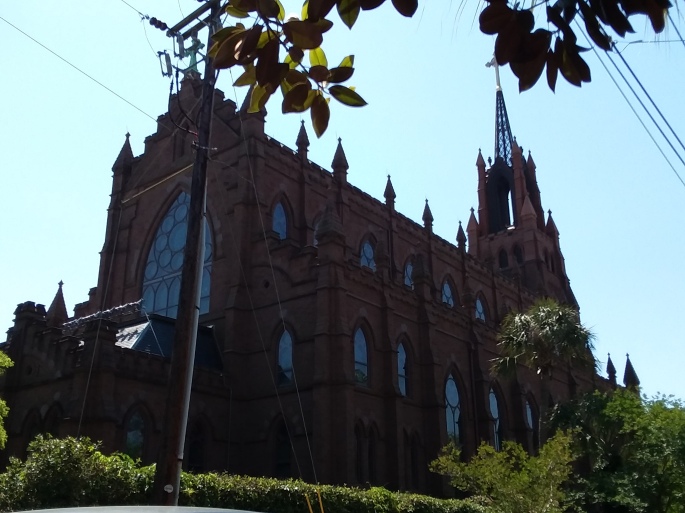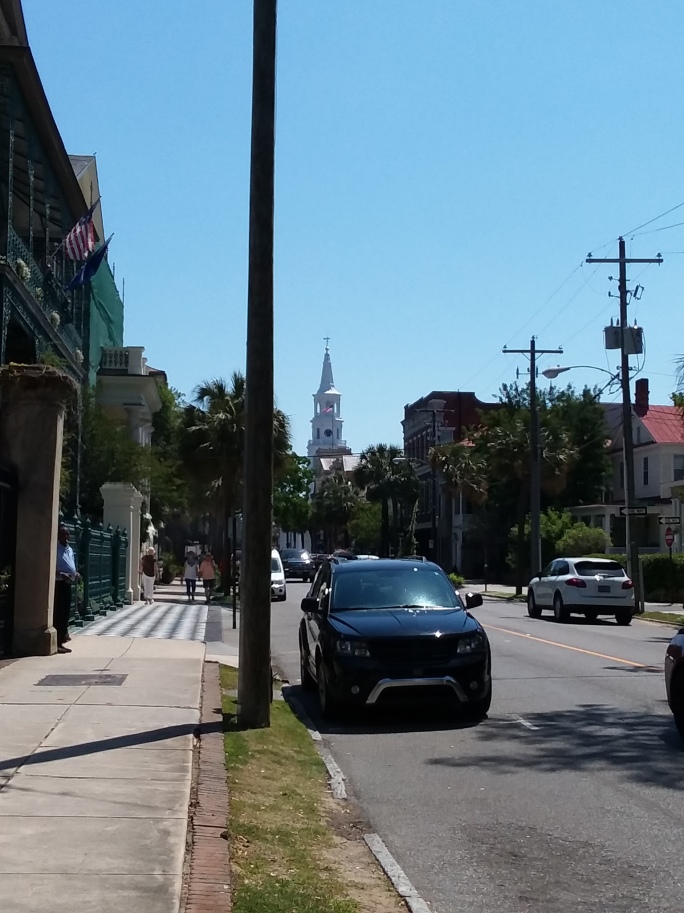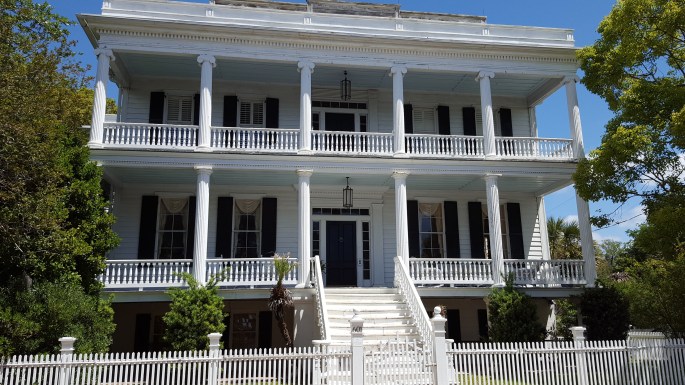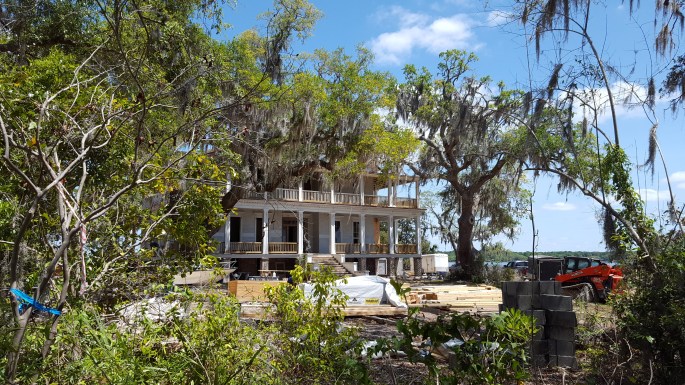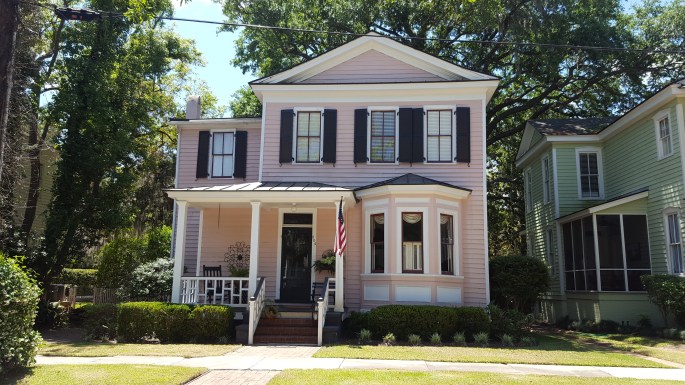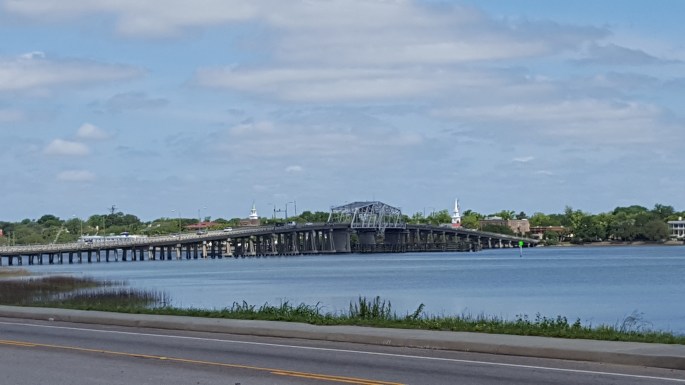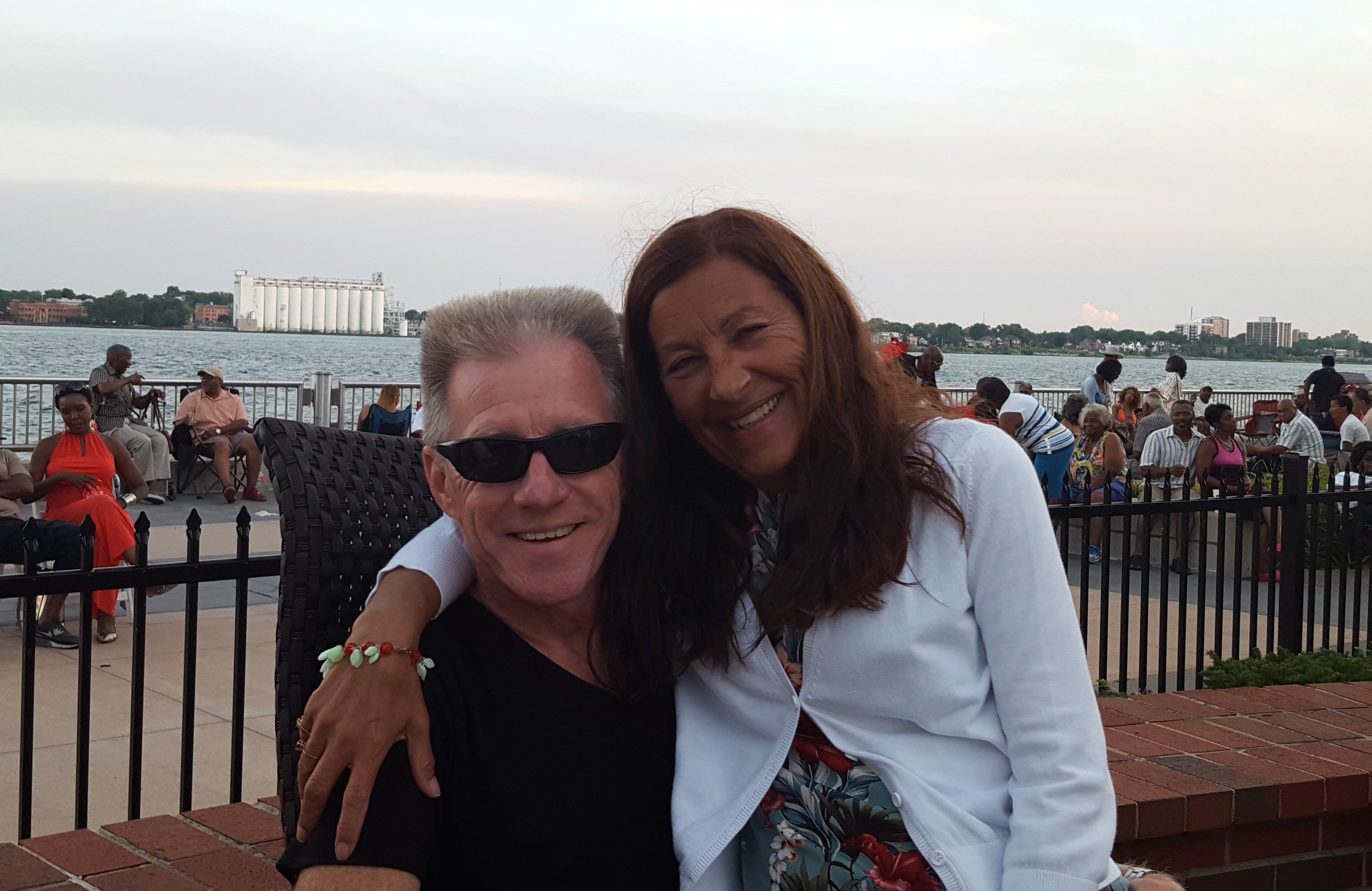
Charleston South Carolina (Port #79) – May 9 – 12

May 9 – Wed
We departed Edisto Island after only 1 night on Wednesday and headed for an exciting stop in Charleston South Carolina. Along with St Augustine, Savannah, & Beaufort, this is one of the highly anticipated cities on the southeast coast.

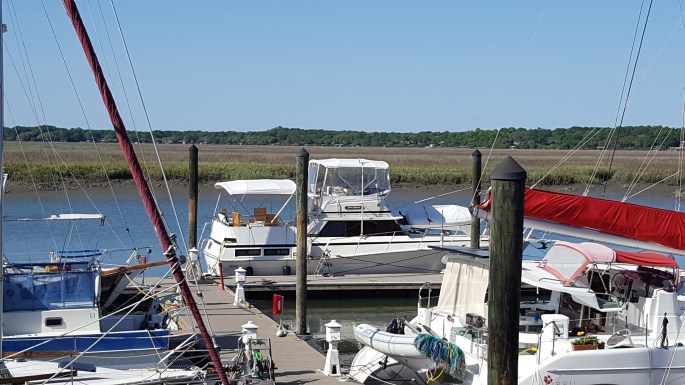
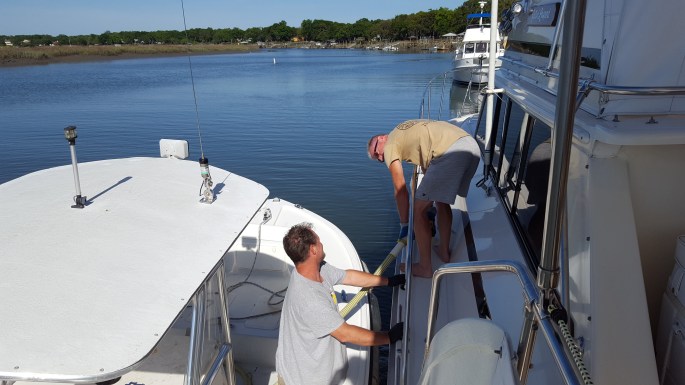
We arrived at the Charleston City Marina about 1pm at the peak of tide current. So we had current pushing us one way, wind pushing us one way, boats in front / behind our dock space, and we were in a somewhat narrow fairway on the inside of the Charleston Harbor Mega-Dock. With no bow/stern thrusters, we were a little nervous, but the docking experience gained through the Loop paid off and the event turned out to be an easy docking after doing a 180 turn & heading into the current (as we always do). The Mega-Dock is 1530ft long, and Charleston City Marina has over 19,000 feet of linear dock space. Here is a photo of the long Mega-Dock.
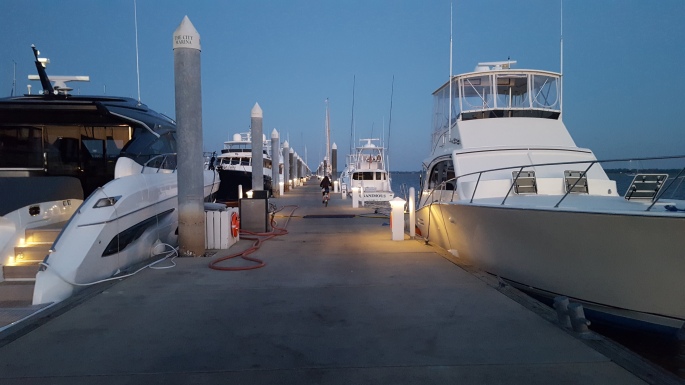
20180509_202817
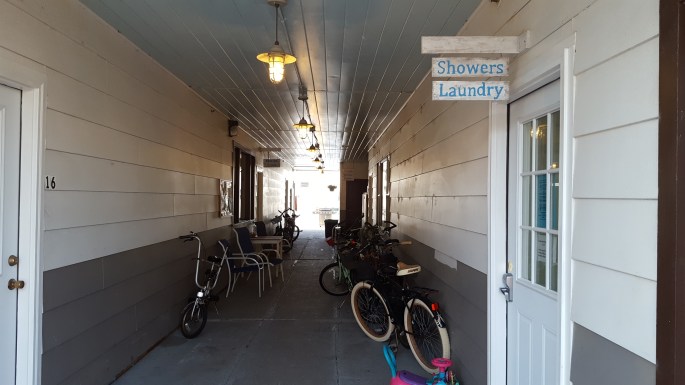
The marina is very nice for a City Marina, they have Cable TV, 7 private shower rooms, and a shit-load of young dock hands who are all very good and very nice.
They also have a couple interesting pump-out boats named ; The Grateful Head & The Bow Movement.
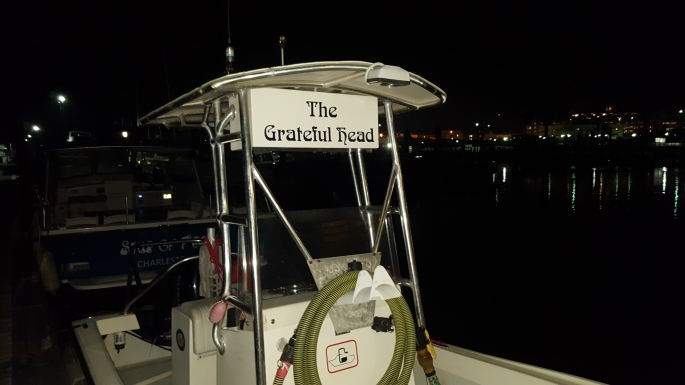
20180511_22041820180511_220430

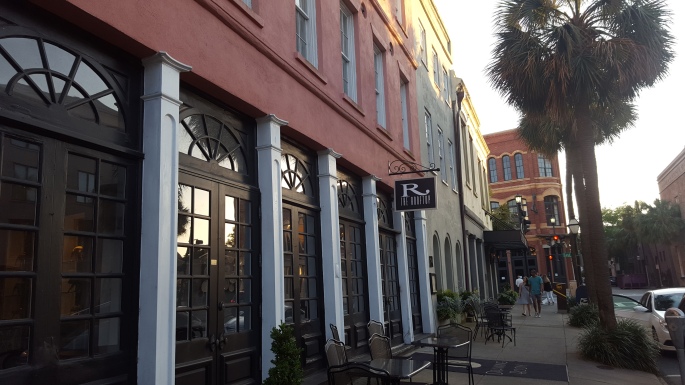
After gettin’ tied up & cleaned up, we headed into downtown Charleston and walked around the City Market area, got some tickets for a carriage ride the next morning, and then went to dinner.
While purchasing the carriage tour tickets, I picked the local’s brains about restaurants. They recommended several places , one of them being Poogan’s Porch.
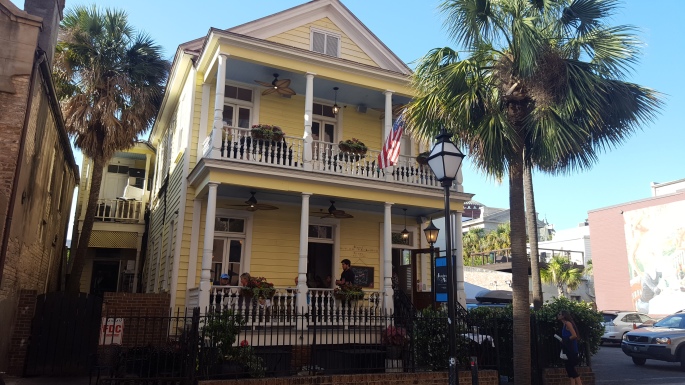
Poogan’s Porch on Queen street, is one of Charleston’s oldest establishments, & recognized by Martha Stewart Living, Wine Spectator and The Travel Channel.
The building was built in 1888, but not allowed to be converted to a restaurant until 1976. The previous owners of the house sold their home and moved away. A little, down-home southern dog named Poogan stayed behind. Poogan had been a neighborhood fixture for years, wandering from porch to porch, in search of back scratches and table scraps, endearing himself to all. From his proud porch perch, he served as the official greeter. It seemed only right to the name the restaurant after him. Poogan died a natural death in 1979. His porch and restaurant live on in his honor.
The place looks pretty small from the front, but I walked through the place and it was huge on the inside with many rooms downstairs, upstairs, & in a rear courtyard. Jonell & I ate at 1 of 4 tables in what appeared to be the small living room on the 1st floor in the front of the building.
The food was again awesome.
> I had the Roasted Duck Pirloo (Seared Duck Breast, Andouille Sausage, Wild Mushrooms, Anson Mills Middlins Rice, Merlot Gastrique)
> Nellie had the Cornmeal Fried Catfish (Local Étouffée, Collard Greens, Red Rice Hoppin’ John).
20180509_17582020180509_182920
The place had MANY photos on the wall of famous people who had eaten there, here is one from the god-father of soul.
20180509_183003

After dinner we walked around a place called the Vendue Park. The park is on the waterfront. Charleston is essentially on a peninsula , surrounded by water on 3 sides. The park had several fountains.
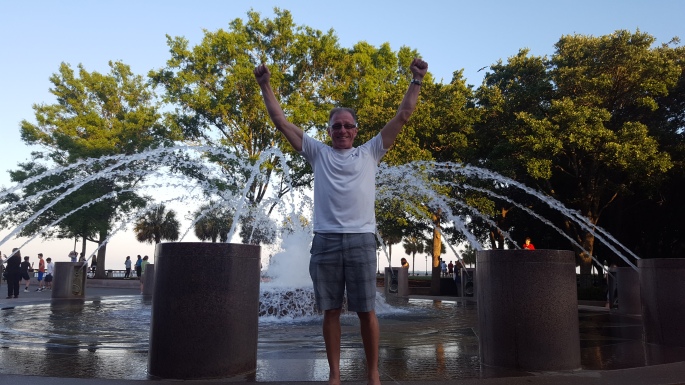
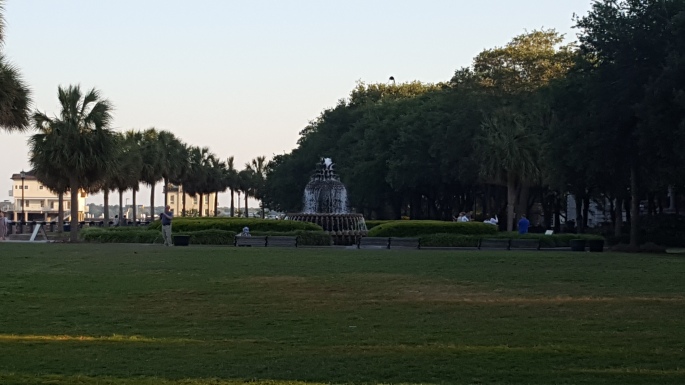
20180509_192504
Did I mention that “this is what retirement looks like”

20180509_192324

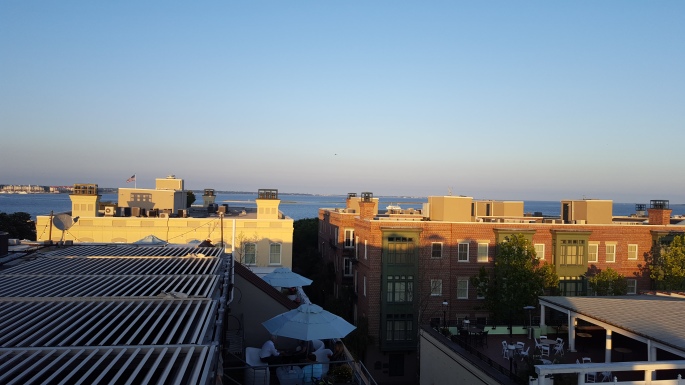
Near the Vendue Waterfront Park, we went to the Vendue Hotel & Roof Top Bar. There was a nice 3 piece Jazz band on the lower level bar of the hotel, but we took the elevator up to the roof top for the great views. When we got to the roof top, it was somewhat disappointing, with the roof being at the same level as surrounding buildings – we saw only the top of buildings & AC units (Bla). As we were about to leave, Jonell spotted another stairway going up another level. We took the stairway and found the real roof top bar. It was better, but still not as great as the roof top we had experienced at the Madison Hotel in Memphis. We had one drink and booked
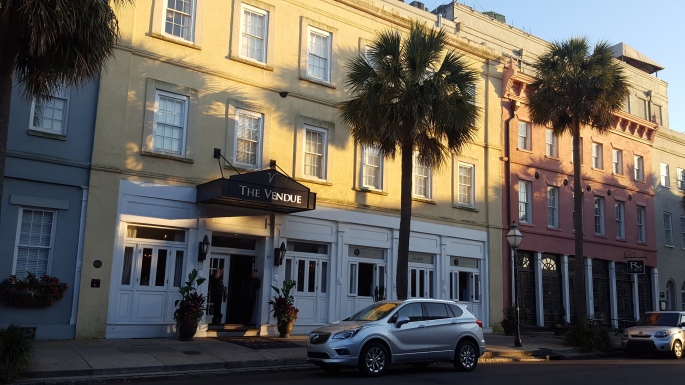
20180509_19271420180509_19274120180509_193816

Overall, it was a great 1st half-day & night in Charleston.

May 10 – Thu
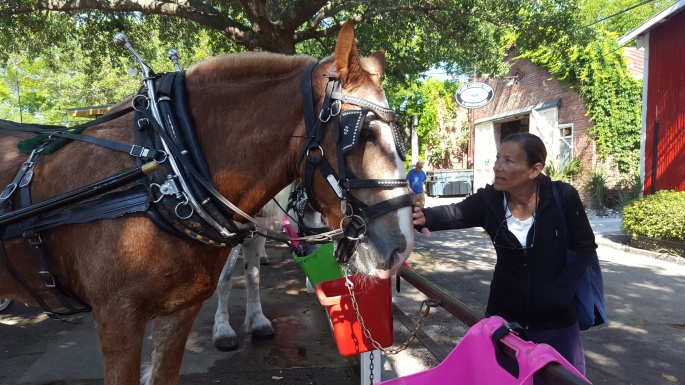
On Thursday, we had an early rise at about 7am in order to arrive at our 9am Carriage Ride Tour time. We like to use the carriage rides to get the initial feel for what to do & seen in a new city. Today we had tour guide Aaron & horse Abba. Abba is a very large Belgian Draft Horse, known as a work-horse.
As with previous carriage rides, we learned a lot about the city’s history & the main attractions to see.

The Charleston History – Quick Version (sorry, the history lessons will soon be over).
> Founded by British colonists in 1670.
> Charleston grew from a colonial seaport to a wealthy city by the mid 1700’s.
> Through the mid 1800’s, Charleston’s economy grew due to its busy seaport and the cultivation of rice, cotton, and indigo.
> In April of 1861, Confederate soldiers fired on Union-occupied Fort Sumter in Charleston Harbor, historically known as the 1st shot of the Civil War.
> Charleston was slow to recover from the devastation of the war. But its pace of recovery became the foundation of the city’s greatest asset – its vast inventory of historically significant architecture.
> Short on capital after the war, Charleston was forced to repair its existing damaged buildings instead of replacing them.
> After the war, the City gradually lessened its dependence on agriculture and rebuilt its economy through trade and industry. Construction of the Navy Yard in 1904 financially boosted Charleston into the 1900’s.
> During the first few decades of the 1900’s, industrial and port activities increased dramatically. Later, major sources of money came from the Charleston Naval Base, the area’s medical industry, and the tourism industry.
> Today, approximately 4.51 million people visit the city annually, generating an estimated economic impact of $3.22 billion.

During the tour, Aaron discussed several tidbits about the city
> Charleston was initially built as the only Walled Colonial City, with a 17 foot tall wall.
> It is known as The Holy City, with over 90 churches.
> They claim to be 2nd to only Rome, in historic buildings.
> Lots of the current city of Charleston, is built on landfill.
> Charleston is in the shape of a peninsula, and is only 1 mile wide x 3 miles long.
> Charleston was heavily involved in slavery, processing over 40% of 600,000 slaves.
> It is one of the best culinary cities in the country.

There are MANY things to see & do in Charleston.
I had a very long desired “To-Do” itinerary, and have listed below in Green, which of the attractions we were successful in visiting. In only 3.5 days of time, we had a large task list and did not make all the attractions.
> Carriage Rides
> The City Market – a 4 block long, enclosed set of vendors selling everything !
> Historic Churches – called the Holy City, over 90 churches.
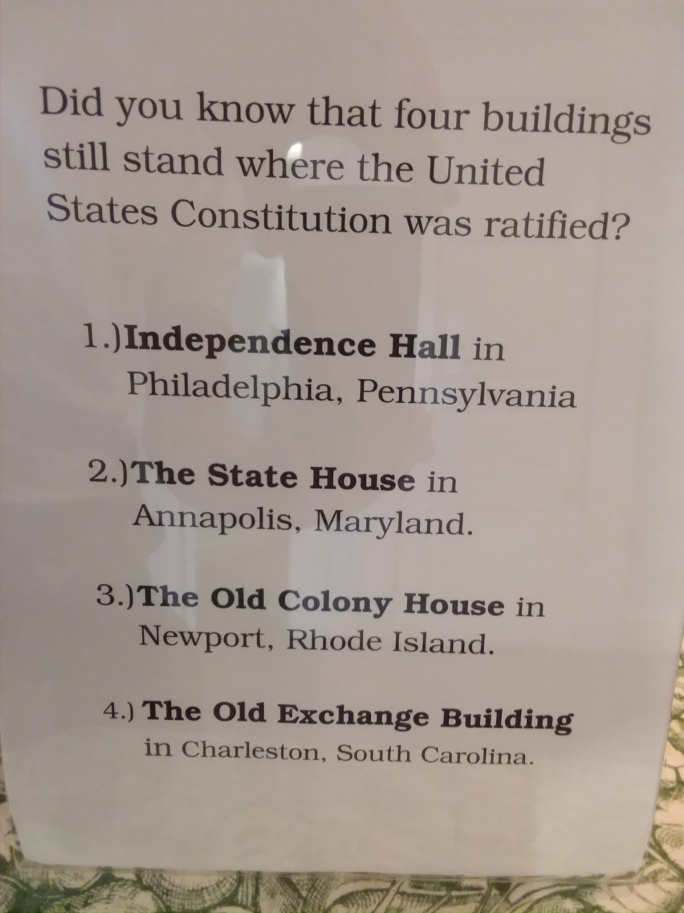
> The Old Exchange – 1 of 4 places left in the USA, where the Constitution was ratified.
> The Old Slave Museum – a place where slaves were bought & sold.
> Rainbow Row – a row of brightly colored houses dating back to the 1700’s.
> The Battery & Whitepoint Gardens – Historic Mansions & a large park on the waterfront, over-looking Charleston Harbor and Fort Sumter.
> Fort Sumter – site of the 1st Shots of the Civil War.
> The Hunley – 1st submarine ever, to achieve a successful battleship sinking (Civil War)
> The Aquarium – possessing 1 of only 13 Albino Alligators in the USA
> The Angel Oak – 1400 years old, 65 ft tall, and has a 65ft circumference.
> Plantations – Boone-Hall, Magnolia, Draton-Hall, & Middleton
> Ravenel Bridge – The third longest cable-stayed bridge in the Western Hemisphere.
> King Street Shops – high-end stores like Louis Vuitton.

Most of the above was done on Friday, it was a very long day, I walked Nellie’s legs off, I think we covered about 7-8 miles of walking between 10am-6pm.
Here ya go, I’ll try to keep it short.
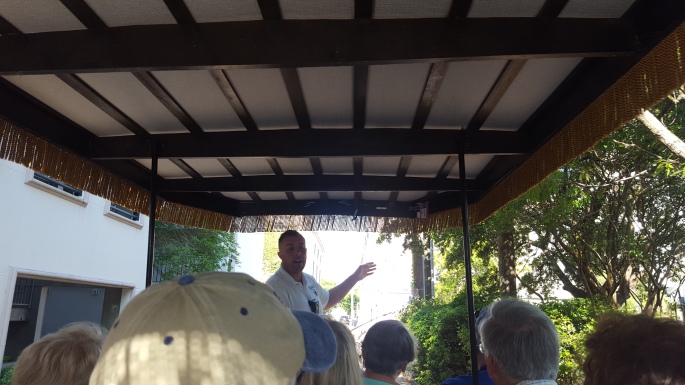
> We started the day with the Carriage Ride – Tour Guide Aaron & Horse Abba
20180510_101001
Nellie giving Abba a pre-game pep talk, do you like coffee Abba ?
20180510_091412
Tour Guide Aaron

After the Carriage Ride, at 10am, we walked thru the City Market.
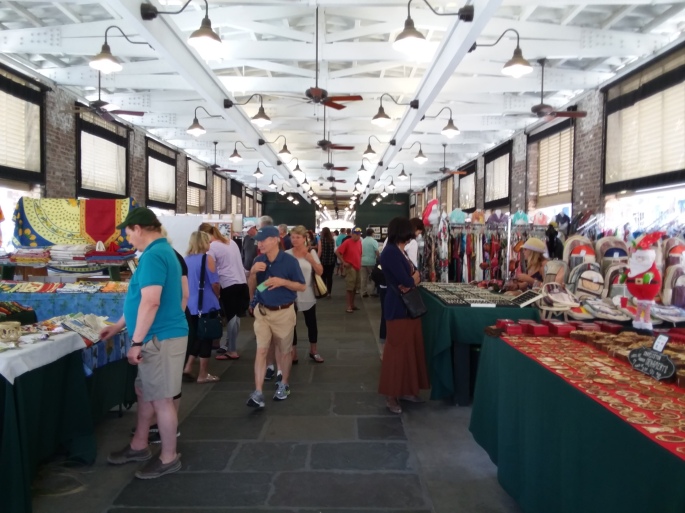
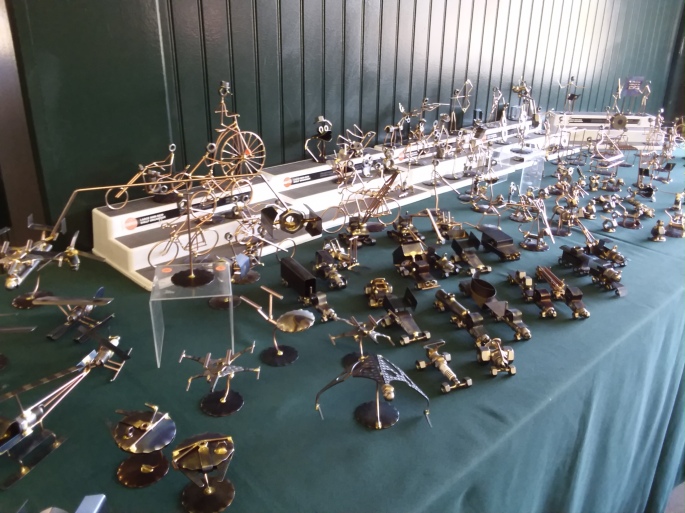
> The City Market is a 4 block long brick enclosed structure originated in 1796. Throughout the 1800’s, the market provided a convenient place for area farms and plantations to sell beef and produce, and also acted as a place for locals to gather and socialize. Today, the City Market’s vendors sell souvenirs and other items ranging from jewelry to Gullah sweetgrass baskets.  Charleston is known for the basket weaving.
20180510_10213420180510_10255920180510_10283520180510_10261020180510_10220820180510_102744

After the City Market, we took a short walk down King Street.
King street is listed by the U.S. News and World Report as one of the “Top 10 Shopping Streets in the USA.”
20180510_104238

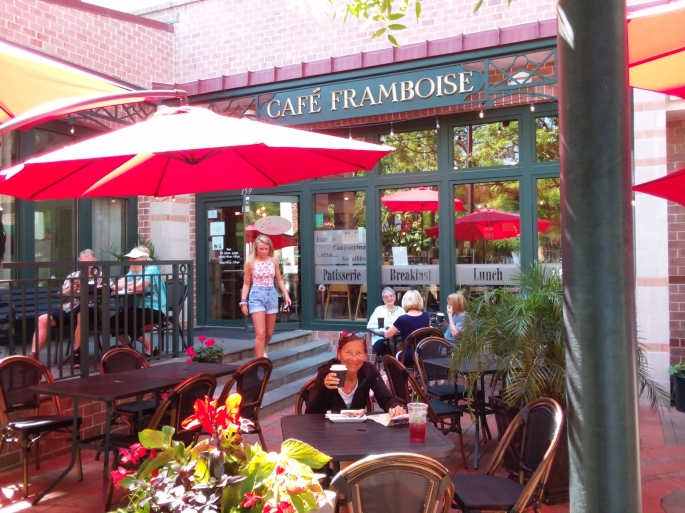
After The City Market & the King street Shops, we took a Breakfast Break at the Café Framboise, and shared a croissant.
20180510_110437


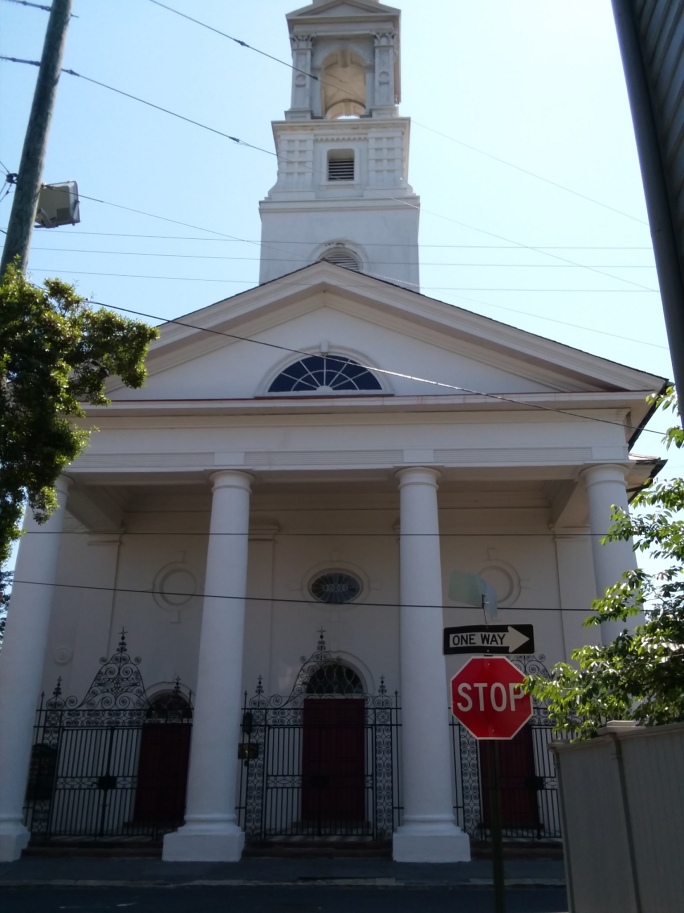
After breakfast, we went to see a few of the 90 Historic Churches
An interesting story from the tour guide was that during the civil war, most of the steeples were bell-less, with the copper bells removed, melted, and used for war supplies.
20180510_112350
St Johns Lutheran – congregation in 1734, built in 1763
20180510_112514
The Unitarian Church – est 1772, the oldest Unitarian church in the South
20180510_112908
Cathedral of St. John the Baptist – 1854
20180510_113606
St. Michaels Episcopal Church – 1752


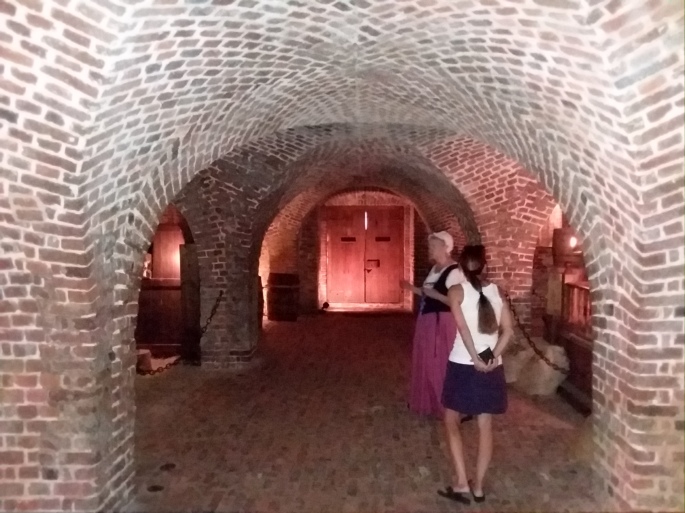
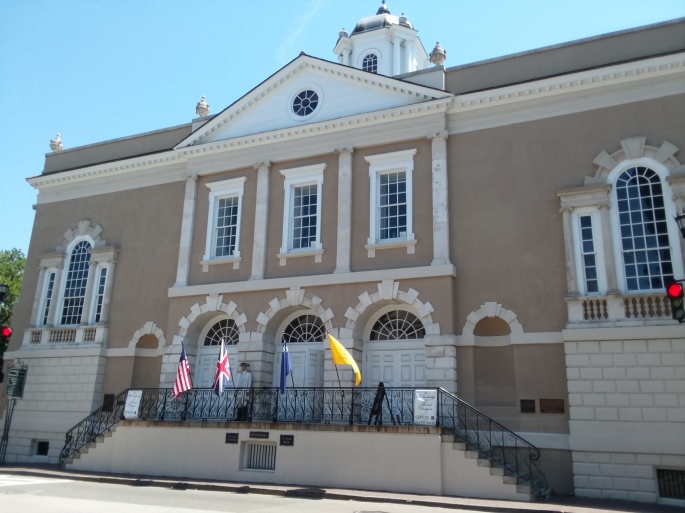
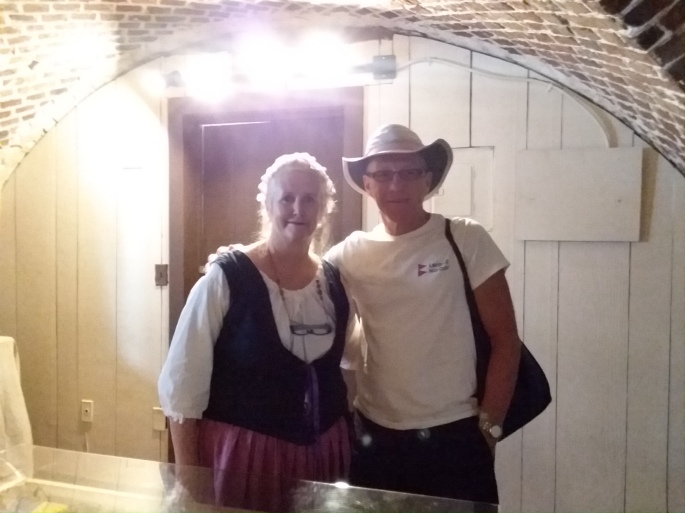
After seeing some of the many churches, we went to a place called The Old Exchange & Provost Dungeon. The docent Susan led us on a wonderful tour and history lesson.
> Built in 1771, a Charleston landmark and the site of some of the most important events in South Carolina history. The building has been a commercial exchange, custom house, post office, city hall, military headquarters, and museum.
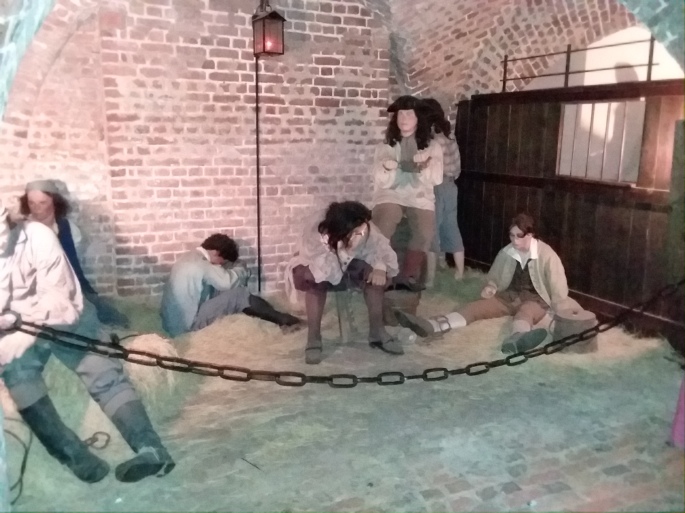
> During the American Revolution (1775-1783), British forces converted the bottom floor of the Exchange into a military prison known as the Provost or “dungeon.” American prisoners of war, private citizens, and enslaved people all endured its harsh confines.
> In 1788 the Exchange upper floors hosted South Carolina leaders as they debated and approved the U. S. Constitution. Today, the Old Exchange Building is one of only four structures remaining where the Constitution was originally ratified.
> In 1791, city leaders entertained President George Washington at the Exchange with a series of lavish dinners, concerts, and dances, attended by hundreds of members of Charleston’s elite.
> Between the American Revolution and the Civil War, the Exchange was Charleston’s most common destination for public slave auctions, making the site one of the most important in the history of the domestic slave trade.
> Today, it is a non-profit historic site that focuses on the American Revolution and Colonial Charleston.
20180510_124835
George Washington is said to have given a speech from this porch
20180510_120101
Our wonderful docent Susan
20180510_121053
The basement, containing the Provost or Dungeon used as a prison during the revolutionary war.
20180510_121118
People considered as traitors to the crown & pirates, in shackles
20180510_120711
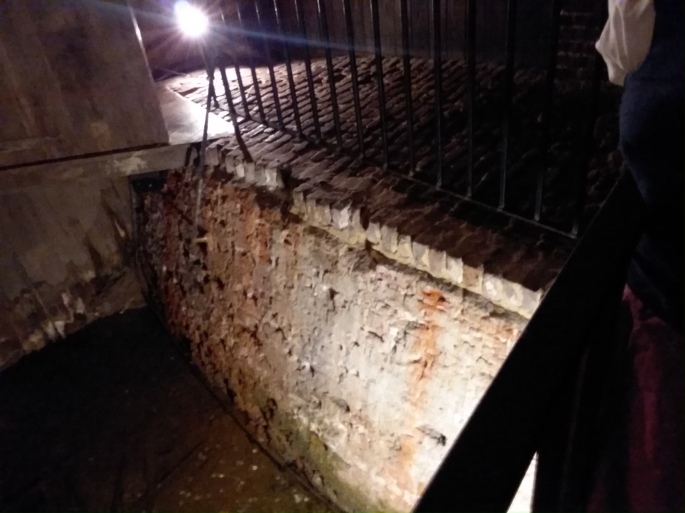
The Old Exchange was built in 1788 on top of the original wall (1600’s) of the Walled City of Charleston. Charleston was the only walled city of all of the British colonies. The wall was required to protect Charleston against threats from the French in the north & Spanish in the south.

20180510_123652

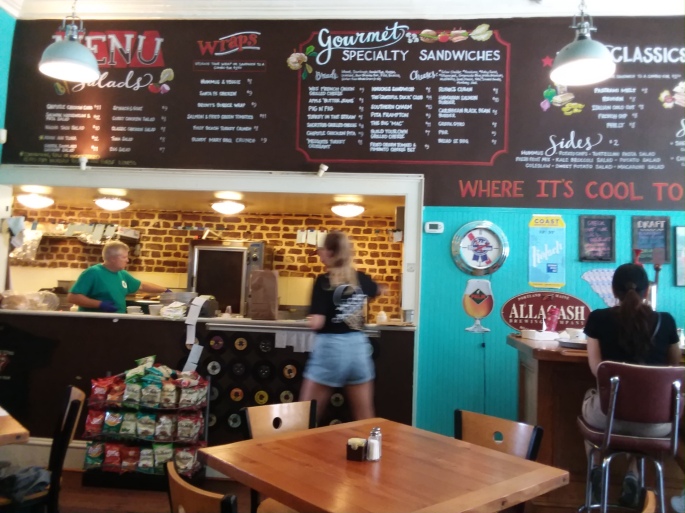
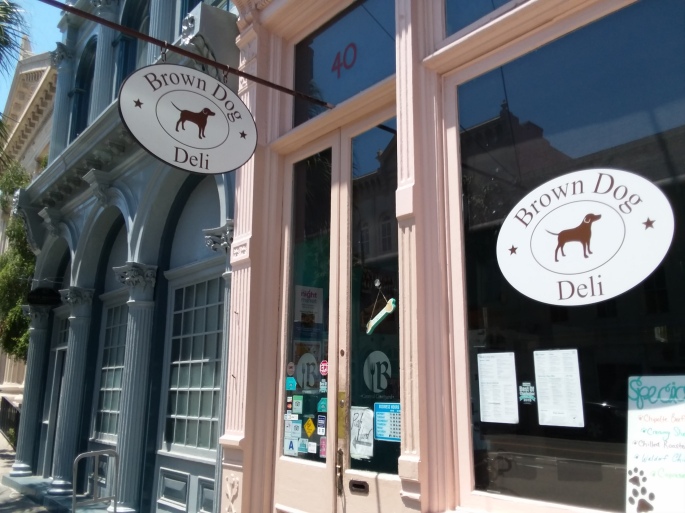
After the Old Exchange, we went to lunch at the Brown Dog Deli.
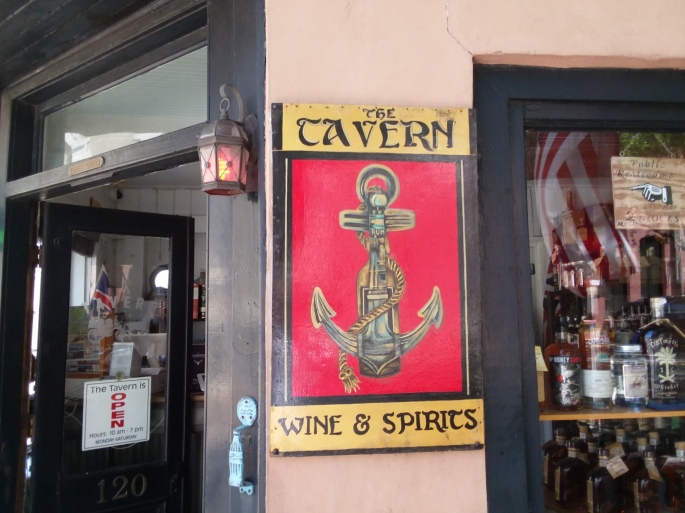
While on the way to the Brown Dog, we passed a place called The Tavern, claiming to be the Oldest Liquor Store in the country ??
20180510_13433720180510_13570020180510_12494420180510_124956

After lunch we continued Jonell Buehler’s Day-Off, and headed to a place called The Old Slave Mart Museum.
The Old Slave Mart visit was an eerie/riveting experience, feeling like I would imagine a holocaust museum feels.  The story goes as follows ;
> Originally, the slaves were bought & sold on the open streets and city sponsored places like the Old Exchange building we discussed earlier in the blog.
> As pressure grew from the north & the abolitionists, open slave trading was outlawed, but the process was not yet made illegal.
> Entrepreneurs began building enclosed structures in which to continue the slave trading. The Old Slave Mart was 1 of about 40 enclosed slave auctions galleries in Charleston.
> Constructed in 1859, the building is believed to be the last existing slave auction facility in South Carolina. In 1975, the Old Slave Mart was added to the National Register of Historic Places for its role in Charleston’s African-American history. 
> The museum did not allow photographs, but had many old photos, audio recordings of auctions (spooky), audio recordings of ex-slaves and their experiences, discussions on how the slaves bartered with potential new owners attempting to keep their families together (saying ” I will work hard for you if you take my family too”).
> One of the most riveting things for me was some photos & recordings showing how the sellers would prep the slaves for auction ; feeding/fattening, dying gray hair of older slaves, using lotions on the skin to heal or hide shackle wounds and whipping marks. Finally dressing the slaves in brand new clothing.
It seemed like prepping a car for resale, it gave us a sick feeling.
> Another memorable experience was looking at the auction brochures advertising the upcoming auction. The flyers listed the date/time of the auction & each slave on the upcoming auction block – their size, weight, age, their skills (general laborer, skilled worker, cooks, nannys), any “defects” like a previously broken leg. Prices ranged from $1000-2500. The slaves were frequently passed down in wills between family members, or used to pay debts.
> Charleston was evidently at the epicenter of the slave trading, reportedly processing 35-40% of 600,000 slaves.
> The Old Slave Mart Museum is the only site of its kind in South Carolina.

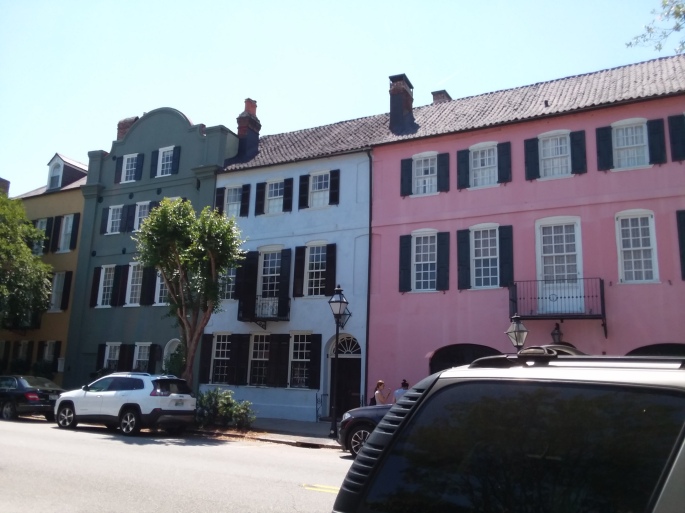
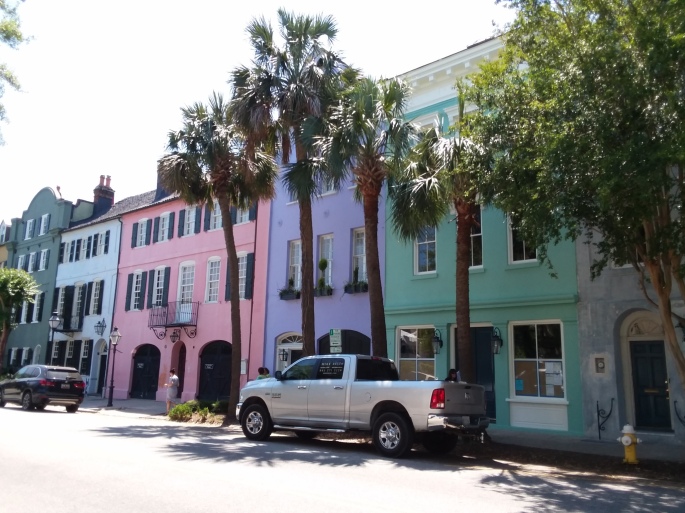
After the eerie experience and history lesson, we walked to Rainbow Row – the name for a series of thirteen colorful historic houses from the 1700’s. It represents the longest cluster of “georgian row houses” in the United States. The name Rainbow Row was coined after the pastel colors they were painted, as they were restored in the 1930’s and 1940’s. It is a popular tourist attraction and is one of the most photographed parts of Charleston.
20180510_14334620180510_143436

After Rainbow Row, we headed on to The Battery & nearby Whitepoint Gardens.
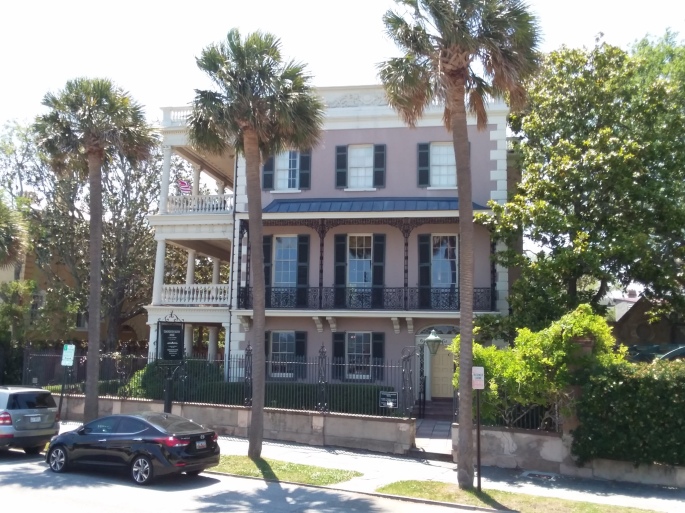
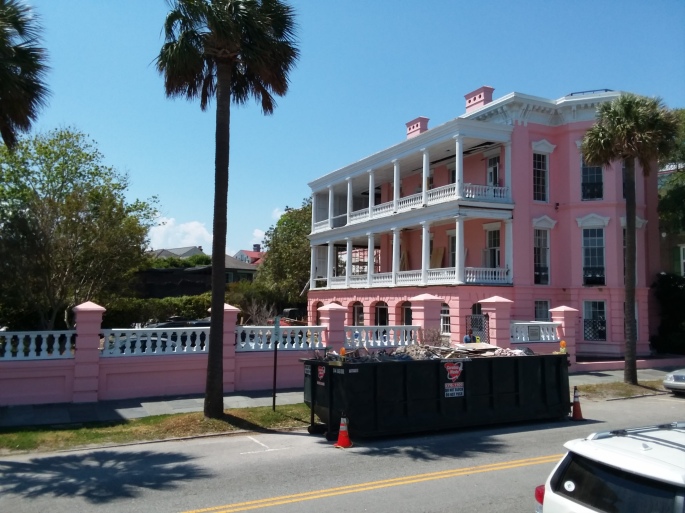
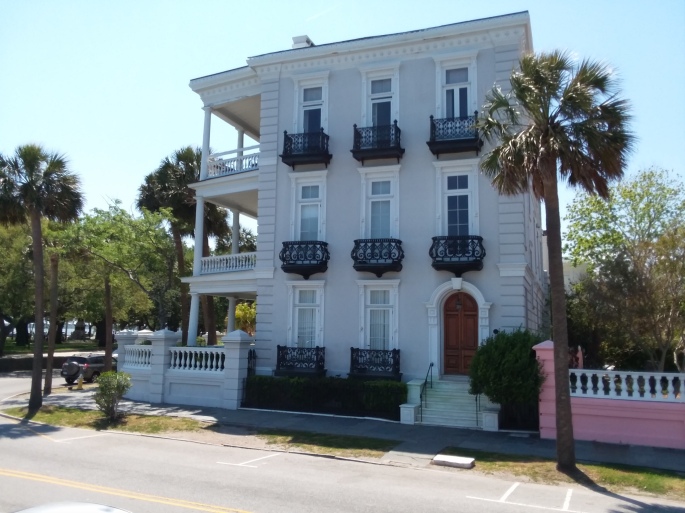
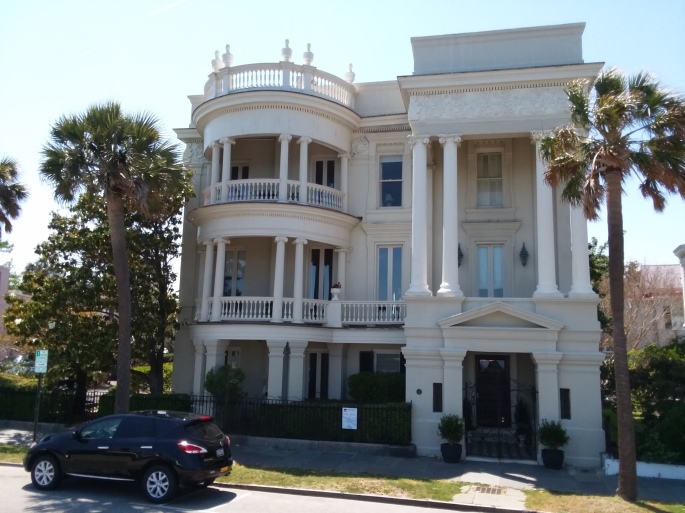
As a tourist destination, The Battery is famous for its stately antebellum mansions. But earlier in history it was a landmark defensive seawall where the army generals & rich socialites could overlook the Charleston Harbor & Fort Sumter. The nearby Whitepoint gardens still show the cannons which helped create the name The Battery.
20180510_14440420180510_14442520180510_14452020180510_14512420180510_14512920180510_145440

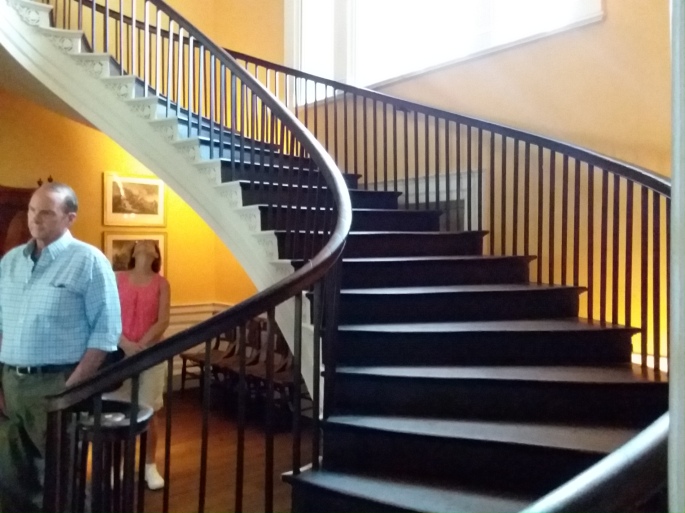
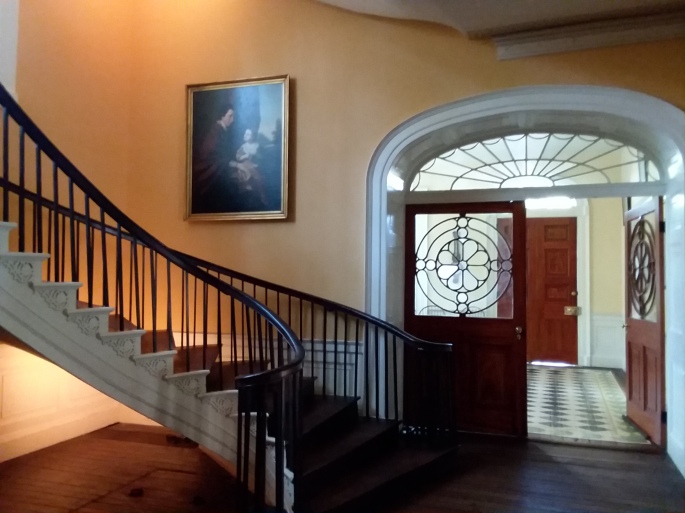
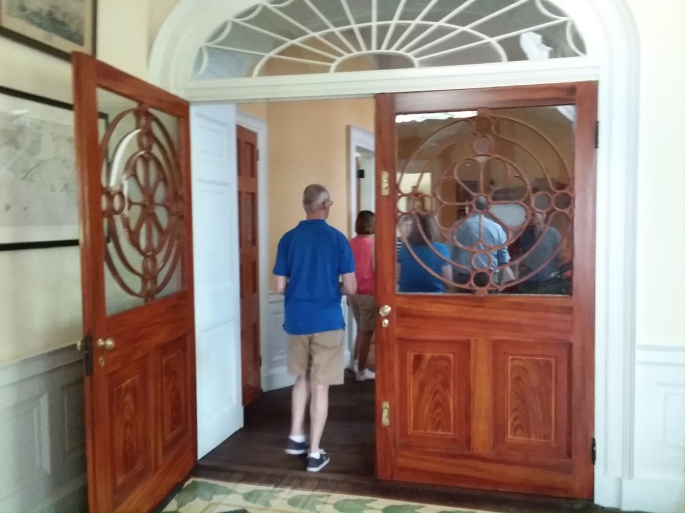
We concluded the late afternoon, now about 4pm, at the Nathaniel Russell House.
Built by a wealthy shipping merchant Nathaniel Russell in 1808, it is recognized as one of America’s most important Neoclassical houses. It was designated a National Historic Landmark in 1973.
The draw to the house was that the interior was supposed to be exactly as it was originally built, paint colors verified by forensics, and a crazy 3 story spiral staircase. After some of the attractions above, this one seemed ho-hum to us (5 rating on the Murphree tourist scale).
20180510_15472420180510_15474820180510_15490120180510_15504020180510_160339

It was now about 5pm, closing time for most attractions, and team Murphree was whipped. It was time to head back to the SS Gettin’ Looped, and take a well deserved pre-dinner siesta !

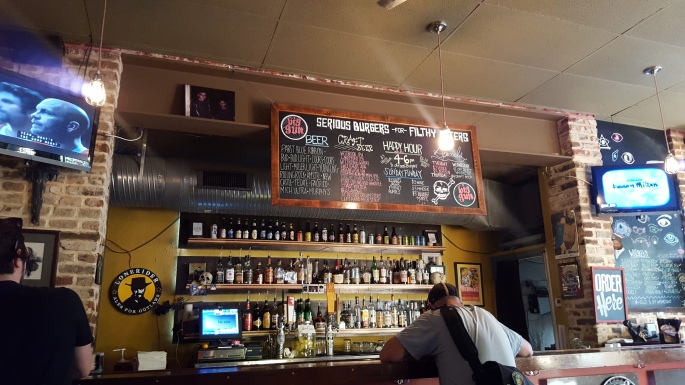
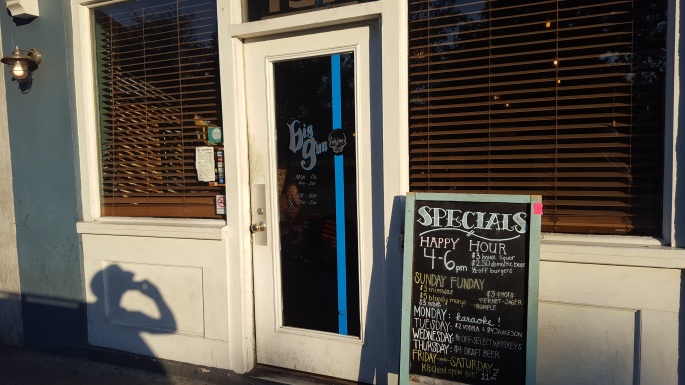
Dinner was very low-key on Friday night, with a 2 mile bike ride to the local community college area, and burgers & beer at the Big Gun Burger & Bar.
20180510_19020220180510_191053
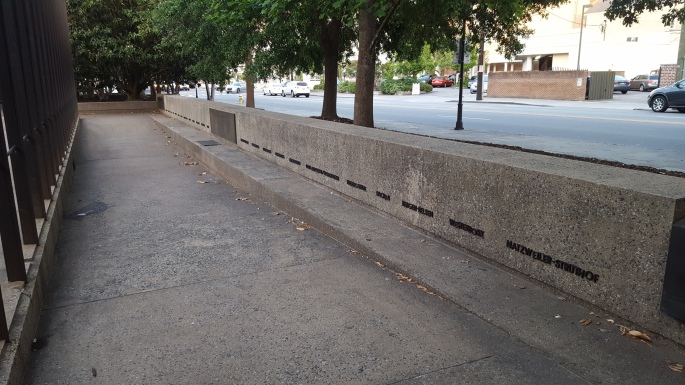
After dinner, we noticed across the street, something that looked like an artistic structure. It turned out to be a memorial for all the Holocaust survivors who ultimately ended up living in South Carolina.
Here is what google says about the monument – the monument features a concrete and bronze inscription wall, that details the history of the Holocaust and lists names of survivors living in South Carolina. The center or heart of the memorial is a four-sided iron screen measuring 25 feet wide, 60 feet long, and 17 feet high. The screen is intended to create a space that is sacred. Within the iron screen walls rests a 12 foot bronzed tallit, a Jewish prayer shawl.
I’m not sure the artist really pulled this off, when I first saw the object inside the walls, I thought someone had left an old tarp laying in the middle of the monument. Maybe it’s just my ignorance regarding the Jewish faith.
20180510_194515
The South Carolinian Holocaust Survivor’s wall, this was cool !
20180510_194827
Ignorant about the tallit, I thought someone left a tarp in the center of the monument. Now I am smarter thanks to the Great Loop and the most history I have ever learned in an 8 month period.

May 11 – Fri
Friday was friends & family day.
I started the day with a call to my pal from 1971, Dave Noffert.
This is the special year in which me & all my pals turn the big “60”.
March was the big “60” for Eric Deloney & Dave Vrabel.
Friday was Dave Noffert’s 60th birthday.
My time is coming in August.
Dave & Debbie Noffert will soon join us on The Loop in June.

The next call was to our Looper Pals Tyre-Less, Jim & Leslie.
They have been in Charleston for a few weeks & we had not seen them since Key West.
So we planned a dinner for Friday night.

The next phone call, was a call that I received from my pal since 1975, Dave Hinman. He is the youngster of the crowd at only 58 years old this October. Dave & Ginger will join us next week in Georgetown SC.

Then after all the phone calls, we had actual visitors.
Randy Eschels & family arrived about 11am.
Randy has been my financial advisor/planner since age 35 (1993).
I met Randy at age 35 and at the time had not been a very serious “saver/investor”.
Jonell and I had a house with a mortgage, but had savings of about only $25,000-30,000.
I had a plan & vision of where I wanted to be in 20 years, but needed some help.
Since I retired at age 57, and able to do The Loop –  I believe that Randy’s influence/experience/coaching has worked out pretty darn well !
I am very grateful.
And for you young adults in your early 30’s with low bank accounts – It’s not too late , start saving & investing. Use the slow/steady approach, not the magic bullet.
Advertisement  
Eschel’s Financial Group
555 S Old Woodward Ave
Birmingham, Mi, 48009
248-644-1144

Randy & family arrived about 11am.
They had spent the week up in Myrtle Beach, and wanted to stop by and say hi before they headed back home.
Randy is an avid Gettin’ Looped blog reader, and we had 2 near misses of hooking up while we were Looping and Randy was vacationing in Bay Harbor & Fort Myers Beach.
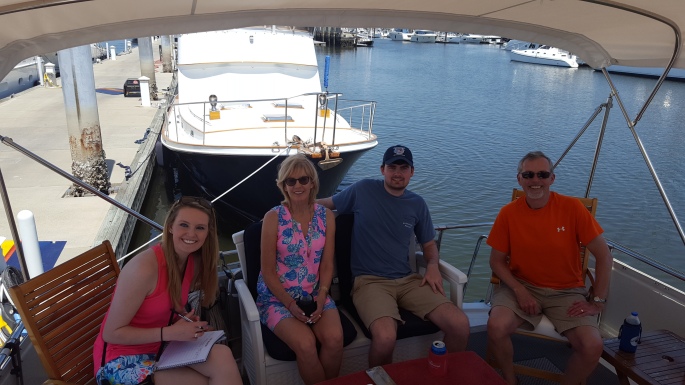
I have known Randy since 1993, but it was the first time that me & Jonell had met his wonderful family; wife Sherie, Son Garett, and Daughter Erin.
20180511_115221
Left to Right = Erin, Sherie, Garett, Randy Eschels

20180511_115248
The family had come together for a week’s vacation in Myrtle Beach, with Garett coming in from Nashville, Erin coming in from Baltimore, and Randy/Sherie coming in from Michigan.
Garett works in Nashville as a financial guy, my recollection is that he is promoting insurance packages to financial planners like Randy. Garett could easily come into the Eschel’s Financial umbrella, but prefers to establish himself on his own for now.
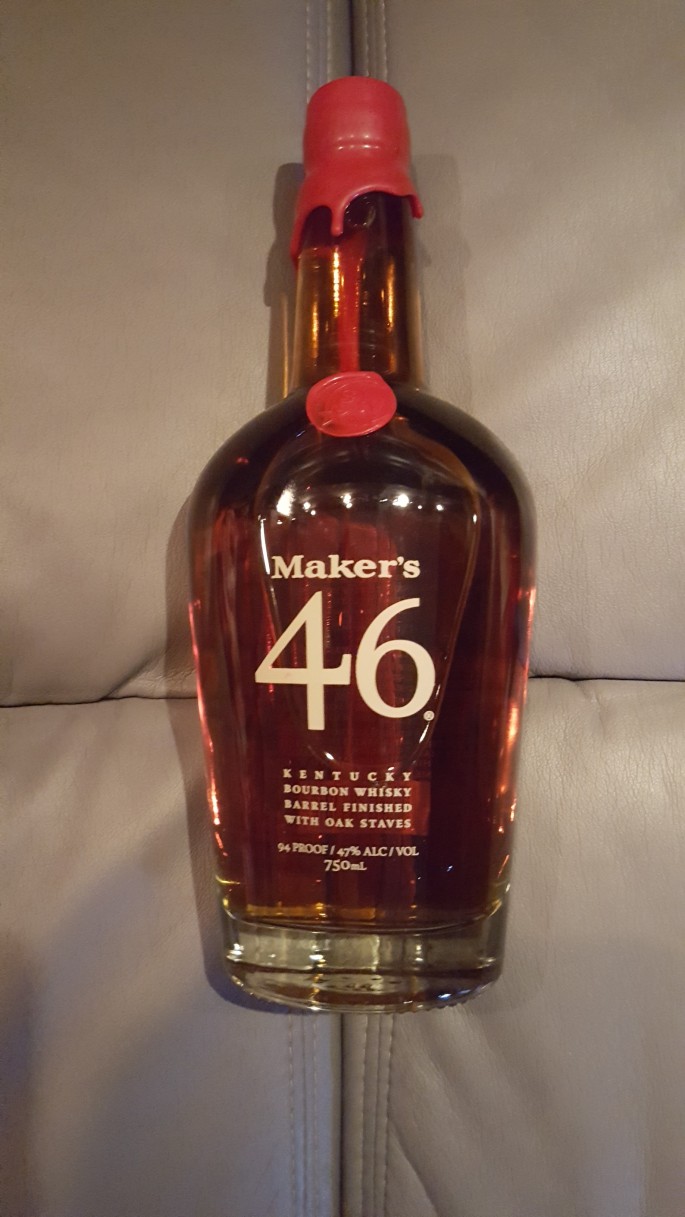
Garett brought me a very special present, a bottle of Maker’s 46.
Maker’s 46 was the special project of the previous president , Bill Samuels, whose parents started Makers Mark. Maker’s 46 was Bill Samuel’s crowning achievement in his 46 years as president. Garett met Bill at the Kentucky Derby a few weeks ago, and was treated to a private tour of the distillery.
20180511_223212 (2)


Erin lives in Baltimore, and works as a video production technician for the marketing side of the Baltimore Ravens. She interned out of Michigan State with the Tampa Bay Buccaneers, and got a full-time position with the Ravens a few years ago.

We had a wonderful discussion on the aft deck of Gettin’ Looped about; The Loop, family, work, sports, education, our children, politics, etc.
Then we went to lunch at a place across the Ashley River called California Dreaming. It was a beautiful venue on the Ashley River on a beautiful day.
And the best part – Randy Paid the bill !
20180511_14480720180511_144004

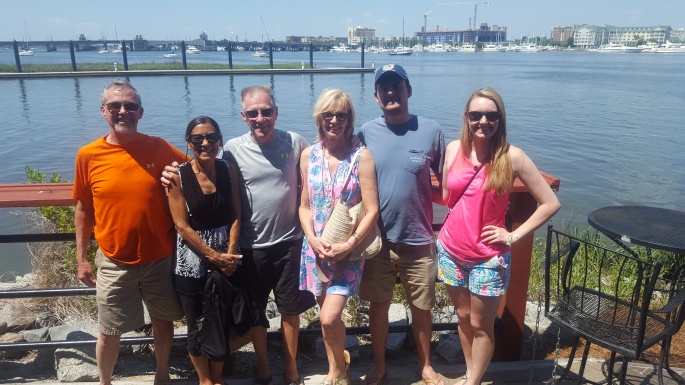
After the Eschels’ left, I took a 30 minute siesta (mid-day naps are great), Nellie read her new book, then we cleaned up for dinner with Jim & Leslie from Tyre-Less.
As I mentioned above, we had not seen Tyre-Less since Key West. We originally met them on the Ohio River, just north of Paducah Kentucky, in September of last year. It was about the same time we had met mutual friends Mother Ocean & Thistle.

Leslie & Jim had heard from 3 different sources, about a place 20 minutes away called Edmund’s Oast.
Edmund’s Oast is listed as a Brewpub/Gastropub, but as The Charleston magazine says in their review “one needn’t love beer to fall in love with Edmund’s Oast”. They called it the most important culinary establishment to open in Charleston in the last year.
They do have 48 different kinds of beer on tap, Jim & I tested 6 different offerings just between the two of us. One beer having a strong hickory smoked flavor, one had a jalapeno pepper flavor, several had chocolate flavors, and most were 6-10% alcohol.
Nellie had a light beer, Leslie drank wine & beer !
20180511_17473620180511_17474820180511_174809

20180511_174817
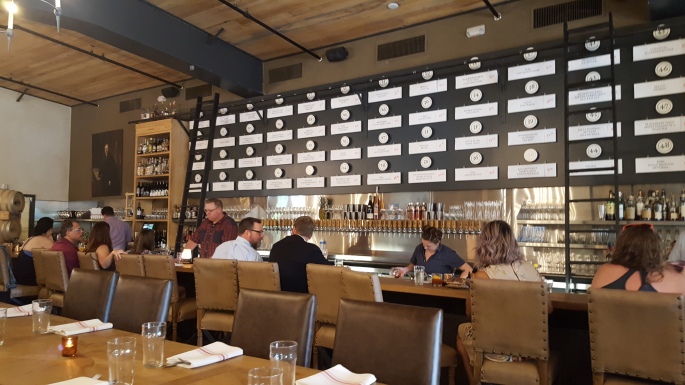
See the 48 types of beer on tap on the wall behind the bar

20180511_17482420180511_182330

The food was excellent, with everything having a light Indian theme with curry in many of the offerings.
I had the Buttered Lamb with Carolina Gold Rice, tomato, & Fava shoots.
Nellie had the Salt Chicken with green curry, rice, lime, & schmaltz (whatever that is).

After dinner we came back & had some libations on Gettin’ Looped, then went over for a couple nite-caps on Tyre-Less, then finally called it a night.


May 12 – Sun

Sunday was prep day to travel to McKlellanville tomorrow, and Georgetown on Monday.
But prior to leaving Charleston, we wanted to squeeze in 1 more attraction, The Hunley Submarine Tour.

The Hunley Submarine Tour turned out to be one of the best attractions we have been to on The Loop.

The Hunley Facts & Timeline
> The first shots of the Civil War were fired on Fort Sumter on April 12,1861, right here in Charleston.
> 4 days after the start of the Civil War, President Lincoln imposed a blockade on all southern harbors.
> The blockades worked very well to cut off supplies to the Confederate Troops.
> The Confederate Army and General Beauregard became desperate, and by 1863 were offering $50,000 rewards for the sinking of any Union Blockade Ships.
> Confederate businessman & entrepreneur H.L. Hunley began the dream of building a submarine to bust the blockades.
> Two failed test runs of the sub occurred in 1863, killing 2 crews of 8 men each.
> Feb 17, 1864 the Hunley became the first submarine ever to record a successful battleship sinking, by sinking the Union Ship, the USS Housatonic, in Charleston Harbor.
> After completing her mission sinking the Housatonic in 1864, The Hunley mysteriously vanished and remained lost at sea for over a century.
> On May 3rd, 1995 The Hunley was found off the coast of Sullivan Island, just northeast of Charleston Harbor, by The NUMA Organization (National Underwater Marine Organization) being sponsored by NY Times award-winning author Clive Cussler.
> By August 8th, 2000, the Hunley was finally safely recovered and was delivered to the Warren Lasch Conservation Center in Charleston, a high-tech lab run by Clemson University specifically designed to conserve the vessel and unlock the mystery of her disappearance. 
> Restoration of the Hunley has occurred since 1995, and is still in process.
> The docent guided tour was one of the best tours that I have ever been on.
> The Hunley is viewed by some, as the most significant artifact of The Civil War. If it would have returned safely, it may have altered the course of the Civil War.

I know the story is already long, but here is a snapshot of what is believed to have happened on the night of attack, Feb 17,1864.
> The Hunley was not a true submarine, in that it operated just below the surface of the water with about 1 foot of structure above the water.
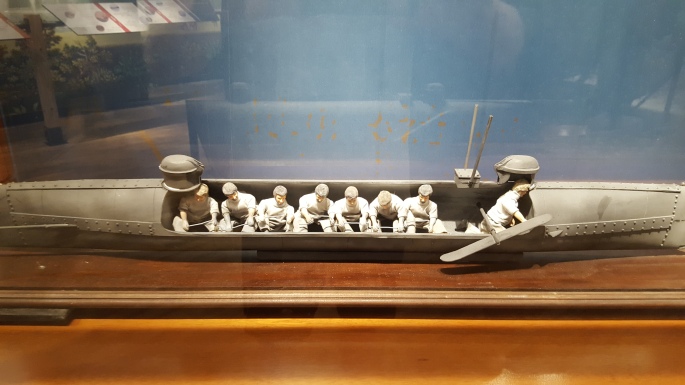
> The Hunley was man-powered, with 8 men moving a rotating bar to propel the sub at only 5-6mph. Tides in the Charleston Harbor played a key role, because the man-power could not overcome the current rush during tidal changes.
> The sub had to open the 2 hatches to replenish air supply.
> The Confederate army had to wait weeks for the Night-Time attack, until the waves were low enough, the moon lighting was minimal, and the tide was going out.
> The Hunley did not have missiles, it had a gun powder bomb on the end of a 17ft rod attached to the front of the sub. The Hunley rammed the bomb into the side of the Housatonic, blowing a 10foot hole and sinking her in 5 minutes.
> After the successful sinking of the Housatonic, it is theorized that the sub purposely filled its ballast tanks to lay 30ft below the surface, on the bottom of Charleston Bay waiting for the tide & current to reverse back while reinforcement Union Boats circled the area. It is believed that the crew members slowly fell asleep and passed. Their remains were found in the exact positions that each man should have been at during the attack.

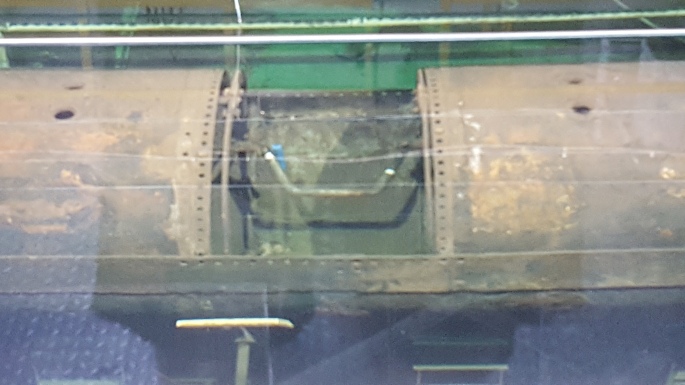
20180512_105120
The Hunley is being preserved in a chemically treated water bath which continues to pulled sodium from the hull for ongoing restoration.
20180512_105447
This is one of the bars the crew would rotate to propel the sub
20180512_112551
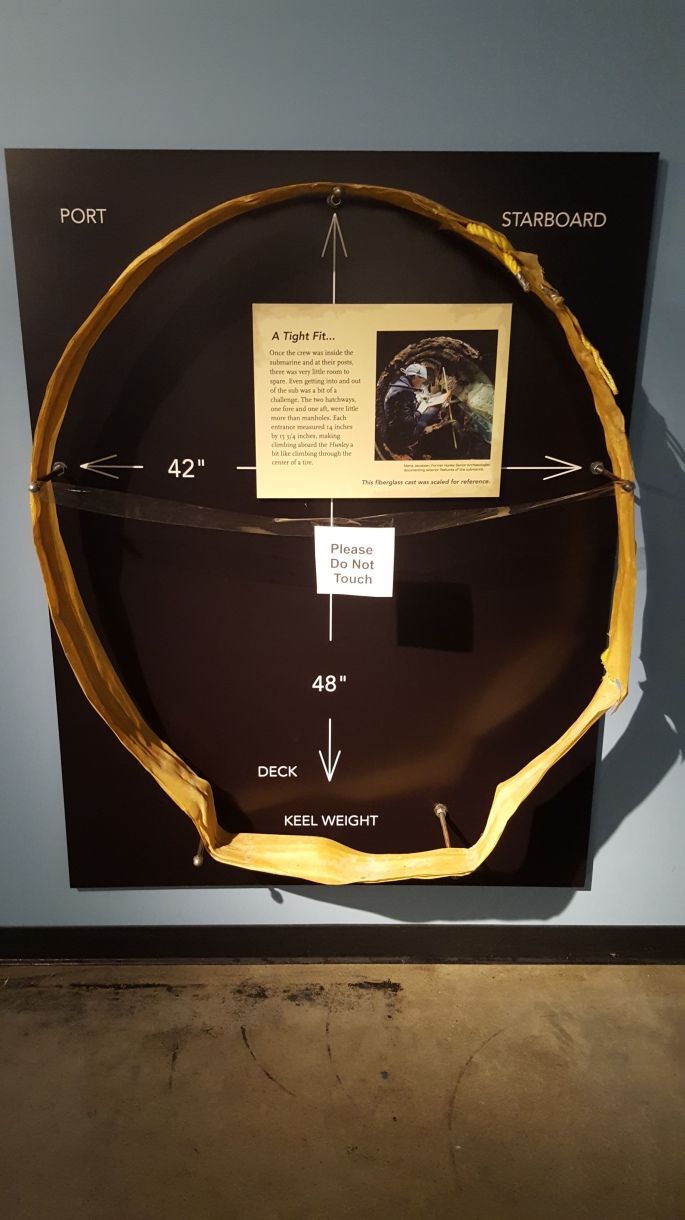
This is an outline of the dimensions of the very tight 8 man sub. The crew were powerful large men (5’10”-6’2″) required to propel the sub.
20180512_113340
The captain at the front controlled the depth and starboard/port movements
20180512_110209
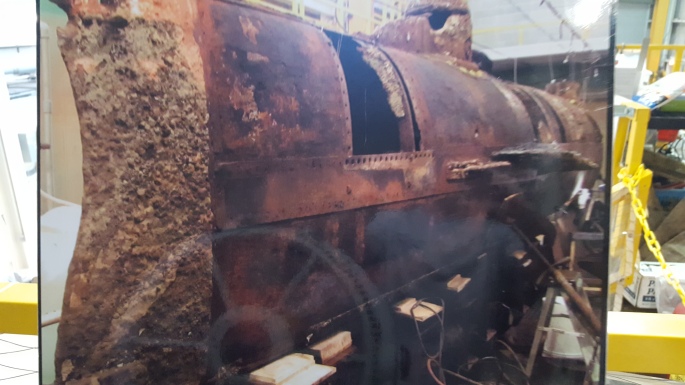
This photo shows the restoration efforts by Clemson University. The LHS shows the surface of the sub when pulled out, vs the RHS after inch by inch restoration. The LHS sea decayed surface was said to be cement like in texture and very hard to remove w/o damaging the sub. The inside & outside of the sub both had to be restored from the cement like texture.


After the tour we came back to the Gettin’ Looped, wrote the blog, & prepped the ICW route for tomorrow.

Next Stops
> Sun = Leland Oil Company in McKlellanville South Carolina – 1 night
> Mon, Tue, Wed = The Harborwalk Marina in Georgetown South Carolina, where we will be joined by Dave & Ginger Hinman.
Edisto Beach South Carolina (Port #78) ; May 8th

After one week in lovely Beaufort SC, it was once again time to move on.
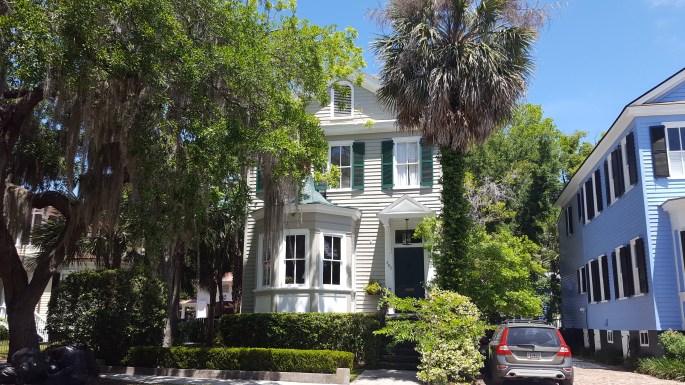
Today we moved from Beaufort , to Edisto Beach South Carolina.
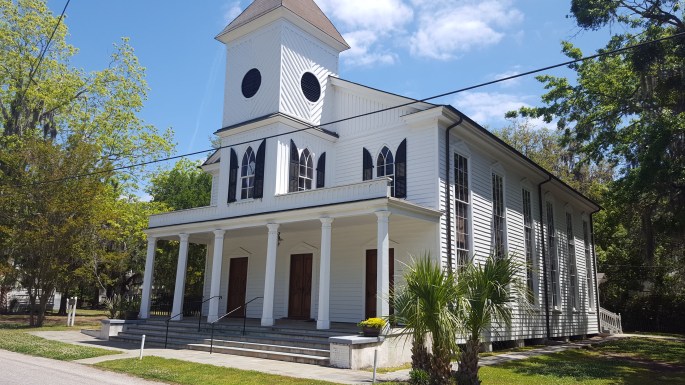
This is a 1 night stay, prepping for arrival tomorrow in another one of the featured ports on the southeast coast – Charleston South Carolina.

Not much to report.
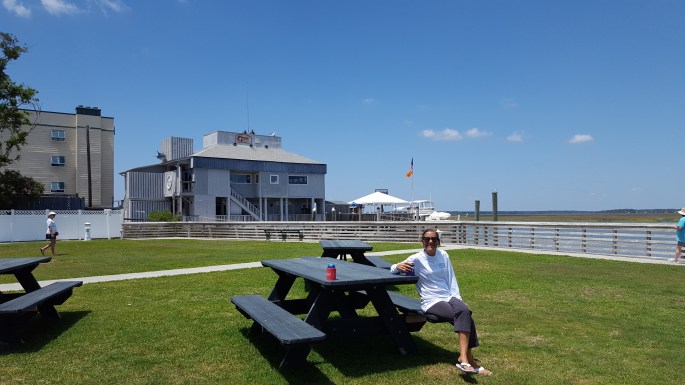
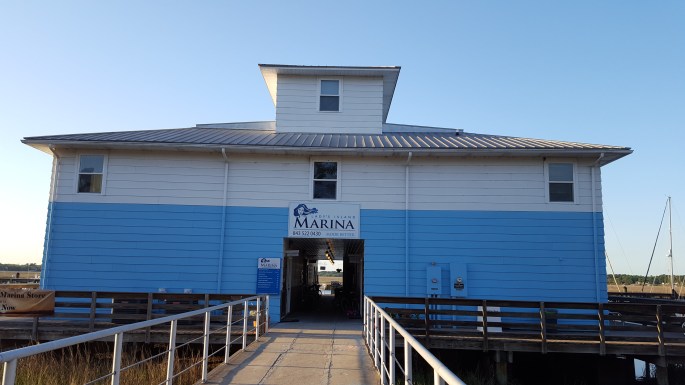
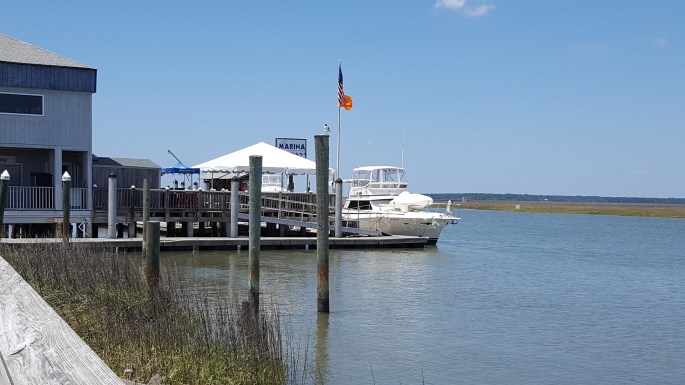
The marina is very low-key, very quiet, actually a lot like the Lady’s Island Marina in Beaufort. It is again on a small creek off of the ICW (Big Bay Creek).

We asked the folks at the marina office if there was much to see in the town and they said not really. The main “to-do” around here is the beach, which is about 3 miles away. The Uber quotes were $9 each way, so we decided to lay-low at the marina and save the money for Charleston. We chilled with a few pre-dinner drinks, listened to music, read books, & did marina prep work for New York (advanced reservations, because we will be there around the 4th of July).

The Marina at Edisto Beach is low-key, but is fun to watch the boats come in for fuel and/or launch at the boat ramp.
20180508_13444120180508_13423820180508_134101

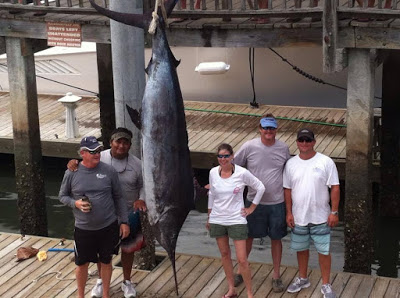
The Marina at Edisto Beach is most famous its Edisto Invitational Billfish Tournament, in July every year. The tournament has been going on for 21 years. A quick google search shows that they are not messin’ around in this tournament, see the catch below from the 2015 tournament. I also learned on google that our harbormaster Larry Darby is married to the local Edisto Island mayor Jane Darby !
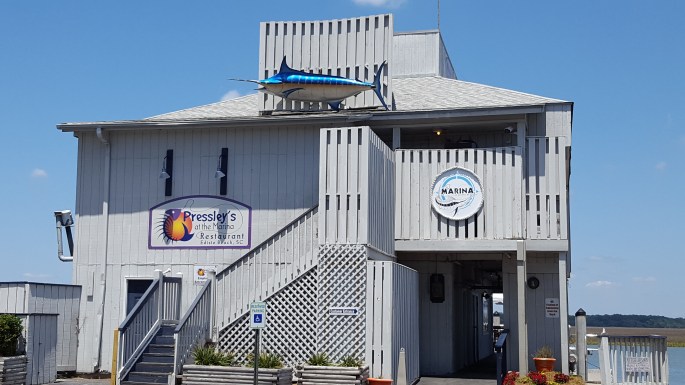
The highlight of the tournament each year are the daily weigh-ins, followed by dinner & drinks at the Pressley’s Restaurant connected to the marina.
CrystalBlue

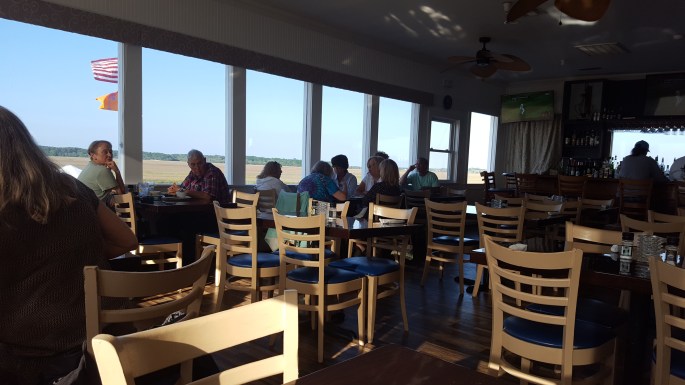
For dinner we did in fact go to the Pressley’s Restaurant. Google rated them 4.4 stars so we gave it a try. It turned out to be “Ok”, not bad but not as spectacular as some of the previous locations. But the view from the 2nd floor restaurant over the Big Bay Creek was striking.
20180508_13444120180508_18211920180508_182110

Next Stop = Charleston South Carolina for 4 nights .

Beaufort SC – Lady’s Island Marina (Port #77) ; May 1-7

May 1 –  Tue
After a wonderful week in Hilton Head, we had an incredibly peaceful ride from Hilton Head to Beaufort SC. The waters were calm, the skies were blue & sunny, it was a wonderful day, UNTIL WE GOT TO THE MARINA AT BEAUFORT.

Shortly after arriving at Beaufort, gettin’ tied up, and meeting Harbormaster Mary, we began hooking up the power & water.

Oh Crap – where’s the Shore Power Splitter ?
You active blog readers may remember the Splitter !
It was the same splitter we had to buy new at $550, after we had an electrical issue way back at Grafton Harbor outside of St Louis in September of 2017.

After the normal 30 seconds of oh crap, panic, now what do we do – I called the Harbour Town Marina back in Hilton Head and told them that I had left the splitter connected to the shore power station.
Nancy at Harbour Town said that “they would check & call me back”.
After an eternity of 10 minutes, Nancy called back and said “the splitter was not in the shore power station”. 
I said “Oh crap, please go talk to Steve & Norm” in the 2 boats that were on each side of us, to see if they have it”
After another eternity of 10 minutes, Harbour Town employee Leslie called back and said “We have your splitter, we initially checked the wrong shore power station”.
I told Leslie “great, hold it for me, Mary from Lady’s Island Marina has offered to give me a ride back to  Hilton Head” ( 55 miles & 1 hour drive by land).
Leslie said “I think I can beat that deal, I live near Beaufort, I will bring it about 5pm tonight”
I love this boating community, especially in the south, they will do anything to help boaters in need !

20180501_153118
Leslie from Harbour Town Marina & the infamous power splitter cable


We had hooked up the 30amp cables at 1pm as a short-term fix to get power to the fridge & 1 AC unit.
Leslie arrived early at about 4pm.
We hooked up the splitter & had 50amp power.
All was happy again in Gettin’ Looped Land !
20180501_194727

After the hectic arrival in Beaufort, everything was now calm again.
The marina is very low key, and is just across the swing bridge from downtown Beaufort.
After gettin’ the power re-connected with the 50amp lines, we cleaned up and headed into downtown Beaufort for dinner.
Vicky & Diana in the Lady’s Island Ships Store, recommended The Breakwater Restaurant & Bar, so that is where we started our visit to Beaufort.
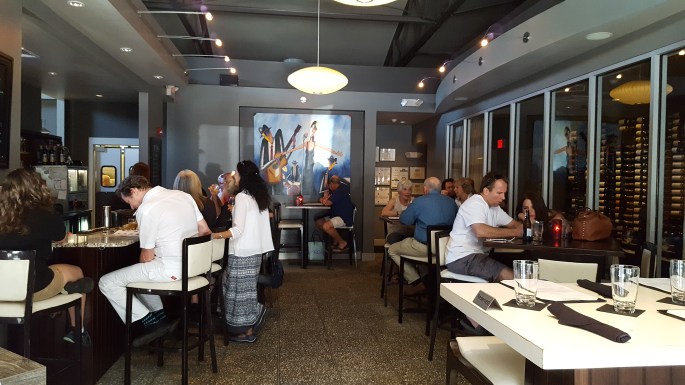
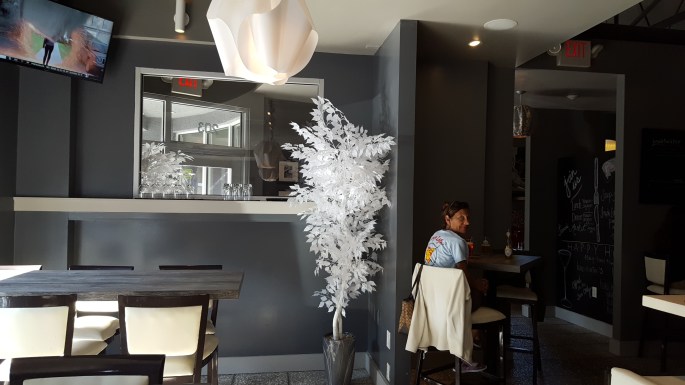
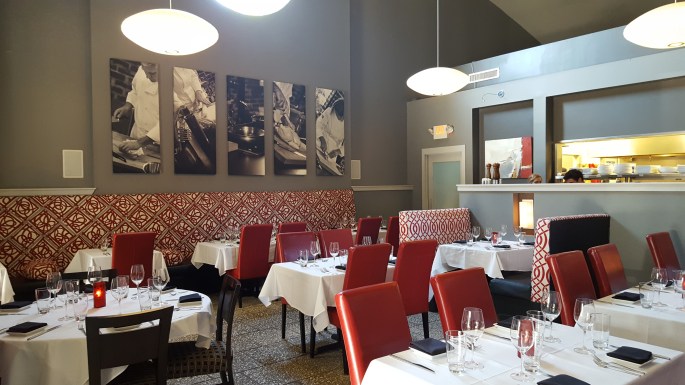
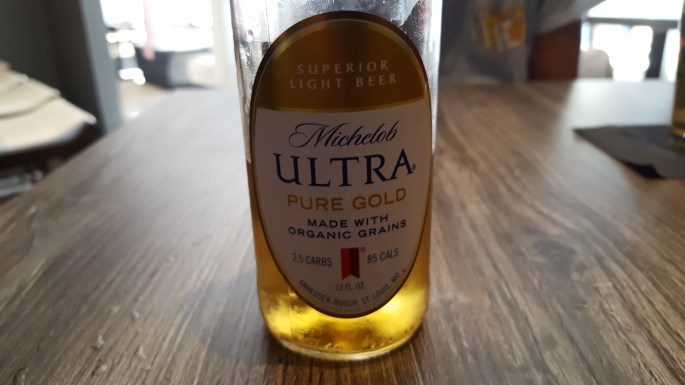
The Breakwater was a very modern looking / artsy place in an ole-time city. Today was Tuesday Tacos night. Vicky & Diana had told us that every week, the Breakwater chooses a different taco filler – sometimes Grouper, sometimes Mahi, tonight it was Chicken Tacos (2 of $9 or 3 for $12). They also had a beer that I had never seen – Michelob Ultra Pure Gold, made with organic materials. It tasted just like regular Mich-Ultra.
20180501_17220920180501_17222020180501_17223620180501_172152

After dinner, we strolled the waterfront in Beaufort.
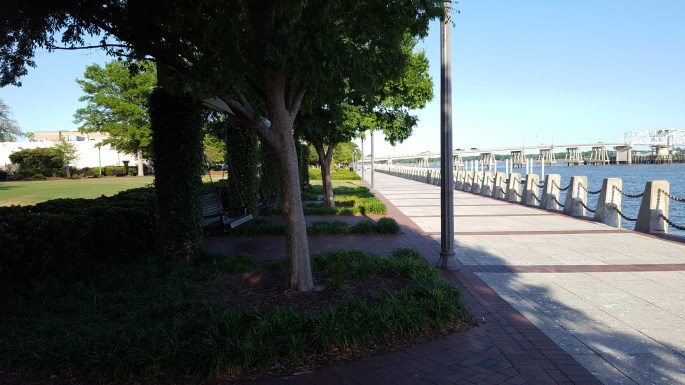
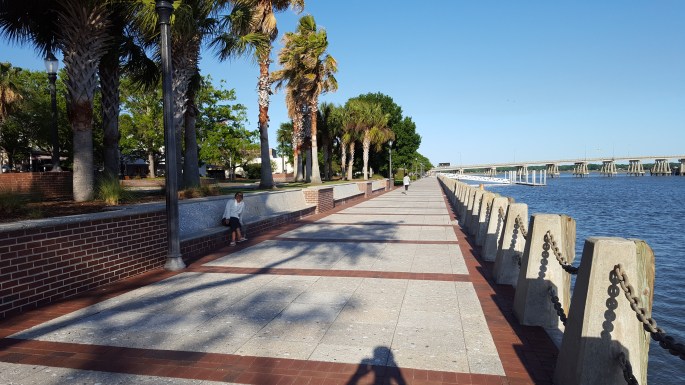
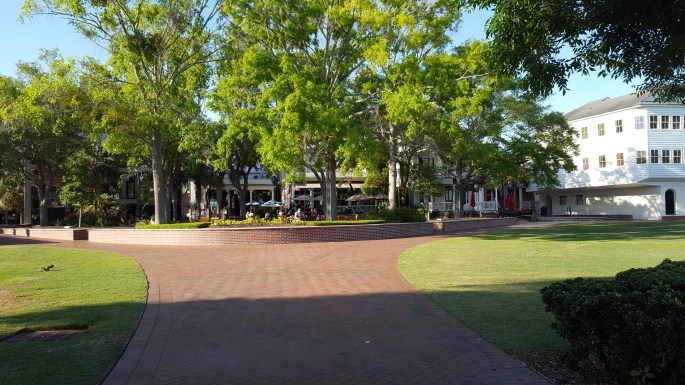
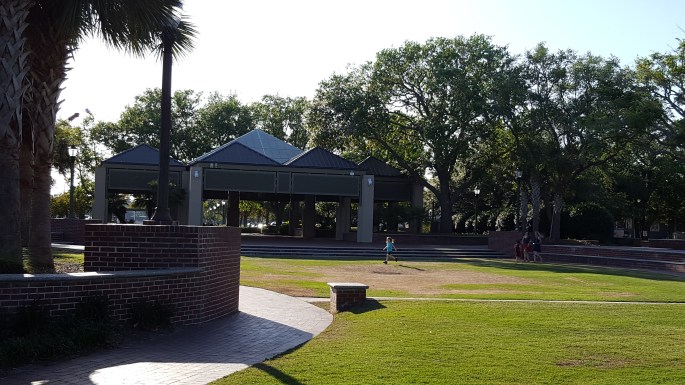
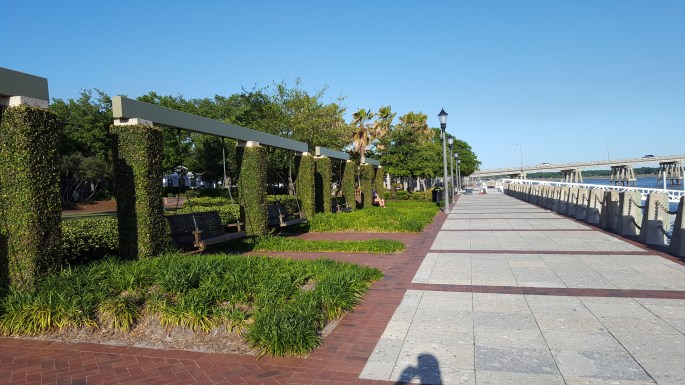
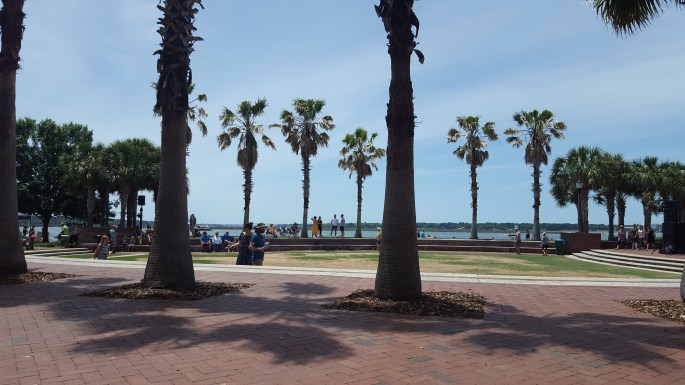
The waterfront is a nice park-setting area with lots of grass, a nice waterfront paver-brick boardwalk, and a LOT of swings and park benches. The swings, park benches, grassy areas, and trees are right on the waterfront. The bars & restaurants have waterfront views, but are set back from the water, behind the park-like areas.

20180501_182010
20180501_181843_00120180501_18201420180501_182028

20180501_182135
There was about 20 of these riverfront swing chairs

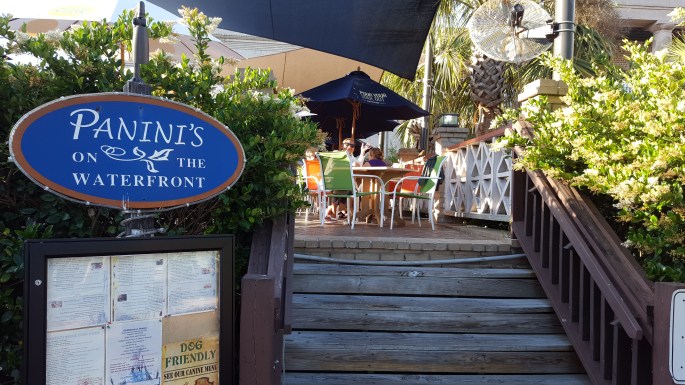
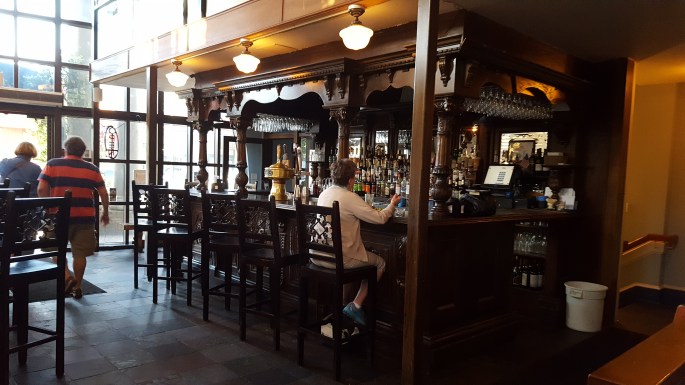
After strolling the waterfront, we stopped at a place called Panini’s on the Waterfront, for dessert & beer. The outdoor setting was very nice with a great view of the park and waterfront & the indoor ambiance was sweet with a very highly wood-crafted bar.
20180501_183524

20180501_183147
The view from our table at Panini’s
20180501_191058
The indoor bar at Panini’s, Thursday night they will have Jazz night

After dinner, we returned back to the Lady’s Island Marina.
It is a very low-key sleepy marina, but in a refreshingly restful way after the recent stops in the more active marinas at Hilton Head & Savannah.
Lady’s Island is on a small river which is about a half-mile from the ICW.
20180501_19213720180501_19220020180501_14573120180501_165611

This marina has something that no other marina we have been to has had – a complimentary work/project room complete with – grinders, band saws, bench vices, etc.

May 2 – Wed
On Wednesday morning , I washed the boat in preparation for some long needed fiberglass cleaning & waxing. It has been about a year now since the Gettin’ Looped has had some new wax.

After the morning boat wash, Jonell & I rode the bikes over the swing bridge into Beaufort for a 1pm carriage ride tour. The carriage tours are a great way to get to know the city upon arrival. We met our crew including horse “Silver”, driver Mark, and tour guide Nicole. Nicole said that Silver is 15 years old and is actually strong enough to pull 3 of the 12 person carts we were on.
20180502_130357
During the ride Nicole gave us a bunch of history about Beaufort, and of course, showed us many of the most historic homes. We will cover the homes tomorrow when we can get better photos, but here is some quick history of Beaufort South Carolina, the area (including Hilton Head) also being known as “Lowcountry”

Beaufort History Lesson ; Nicole described Beaufort in 5 different time periods ;
Colonial period: 1711–1783
Founded by the British in 1711 (21 years before Savannah in 1733), and named after Henry Somerset the 2nd Duke of Beaufort. By 1776, the city became well known for its shipbuilding enterprises & its rice and indigo trade.
The American Revolution split loyalties in the community, with several families supporting the British while others favored independence.  After the American victory in 1781, the British began moving out of Beaufort in the summer of 1782. The treaty of Beaufort established the boundary between South Carolina and Georgia in 1787.
> Antebellum period: 1783–1861 (pre-Civil War)
Carolina Gold Rice (from Indonesia, considered the g’father of current American long grain rice) & Sea Island Cotton brought enormous wealth to Beaufort. Beaufort was one of the wealthiest cities in the United States prior to the Civil War. Lowcountry planters in the city and the surrounding islands were among the most ardent supporters of state secession from the Union. Prior to the Civil War,  Beaufort was at its cultural, economic, and political peak.
> Civil War and Reconstruction: 1861–1893
The Civil War had a dramatic effect on Beaufort, an attack in November 1861 made it one of the first communities in the Deep South to be taken over by the Union. The Port Royal Experiment (a test program in which 10,000 former slaves successfully owned & worked on the land abandoned by owners who had fled during the war) proved that former slaves could be productive/contributing members of the society. Robert Smalls, a Beaufort native became a leading figure in post-war Beaufort & would later become one of South Carolina’s first elected African-Americans to the United States Congress. Due in part to the large African-American population and also Small’s leading role, Beaufort remained one of the last outposts of Republican Party power in the Solid South.
Some of Beaufort’s most prominent families returned to the area but never regained the enormous wealth that the original slave-based agriculture provided. Most of the original antebellum power brokers never returned to the area. The influence of cotton declined but phosphate mining increased. By 1890, Beaufort had regained some of its wealth and prosperity, but a series of coming events would bring Beaufort into a steady economic decline for over half-century.
> The Declining Years: 1893–1945
On August 27, 1893, a category 3 hurricane slammed into the “Lowcountry”, killing over 2,000 area residents and heavily damaging the city. A fire in 1907 continued to inflict economic and psychological harm to the city. The final blow to the area was the infamous boll weevil bug which, like Savannah, decimated most of the cotton crop, which had been the major commodity. By 1910, Beaufort had lost almost 40% of its population from ten years earlier. Beaufort became one of the poorest communities in the state through the 1940s. The growth of lettuce and tomato farming, in addition to shrimping, became the major drivers of the economy during this time.
> The Recovery Years : 1945 – present
Beaufort’s economic recovery in the late 1900s can be attributed to three major influences: military investment, resort development, and downtown revitalization. 1. Parris Island was selected as a permanent home for the U.S. Marine Corps.
2. New investment in the form of resort and lifestyle development on nearby Hilton Head & Fripp Islands also contributed to the economy of Beaufort in the 1960s.
3. Downtown Revitilization, including the completion of a downtown waterfront park spurred the redevelopment and reinvestment of adjacent Bay Street and downtown Beaufort, propelling land values and commanding the attention of real estate investors, national media, and Hollywood.
In recent years, renovations to the park, countless renovations to private homes and businesses, and several streetscape projects have continued to improve the overall quality of life in Beaufort.

Out of all the history, what interested me the most was the Hollywood movie connections. Nicole told us that over 15 movies have been shot in Beaufort. The movies with the highest percentage of filming in Beaufort include; The Great Santini, The Big Chill, G.I. Jane, The Prince of Tides, and maybe the most famous – Forrest Gump (70% of Forrest Gump was shot in Beaufort). More on this tomorrow after we take some photos.

Another story Nicole told us, was the story of Robert Smalls, mentioned above in the post civil war section. Robert Smalls was an African American who taught himself to read at age 17, and during the civil war gained his freedom in a very interesting way. Working on a ship as a slave, Smalls learned a great deal about sail-making and sailing the tides of Charleston harbor. Smalls’ navigational skills earned him a job as the pilot of the confederate boat – the SS Planter.  He was known as an expert pilot, and had studied the maps and sea charts of South Carolina. On May 13, 1862 he freed himself, his family, and many slave crew members, by commandeering the SS Planter in Charleston harbor, and sailing it from the confederate-controlled waters in Charleston to the Union waters 7 miles north. His courage & excellent speaking abilities helped convince President Lincoln to accept African-American soldiers into the U.S. Army and the U.S. Navy.
We will show the Robert Smalls’ birth home in the photos tomorrow.

After becoming Beaufort historians on Tuesday afternoon, we went to dinner Tuesday night at the locals hangout, recommended by Mary the harbormaster, a place called The Fillin’ Station (they spell like we do, no “g” in Gettin’ Looped).
The Fillin’ Station is known miles around for their Wednesday night $4 dinner special. The $4 special includes a Hot Dog, a Hamburger, Pork/Beans, & Potato Salad.
The $8 dollars of food was pretty good and very fillin’, especially when accompanied with the $36 of beer we drank. Ok, we had help with the beer. We met 2 couples at the place that was filled with mostly “regulars”.
Warren & Bonnie are Beaufort natives, and gave us a lot of advice on restaurants & places to go/see while in Beaufort, and also in the upcoming city of Charleston South Carolina. We were so busy talking we forgot to get the blog photo.
The second couple, Vin & Amy, have become near locals in Beaufort after a 3 month stay at Lady’s Island. They did not originally plan a 3 month stay, but liked the area so much and wanted to do some work on their sailboat, so they decided to extend their stay. They have a very interesting story. They are traveling boaters like Jonell & I, but are full time not one year. This is now their life. Amy is a nurse by background and does 40 hours/week of medical records work remotely  while traveling. Vin has had an assortment of jobs, but currently devotes most of his time to an AWESOME video blog of their adventure called “Sailing Nervous”. Below is the header of their website.
‘Sailing Nervous’ is the story of two novice sailors – married for 30 years – searching for freedom and fun. The ‘Sailing Nervous’ video series will trace their progress as they attempt to make their dream a reality. From learning how to sail, to buying the best used sailboat, to fixing up the boat, and then finally beginning their journey, where they live on a boat and travel to exotic places! They invite you to come along each step of the way!
They have had over 2.5 million views, and have a sponsorship of over 125 patrons supporting their dream. Here is their website. = https://www.youtube.com/channel/UC4x5ZeAGz8Z_k0TzQO6fYIQ
20180502_202433

They are a very interesting couple. It was great to listen to their story.

May 3 – Thu
On Thursday, I started the day with a trip to the barber for a long overdue cut. Johnny Harvey, of Harvey’s barber shop fixed me up. Johnny is the owner/operator of what looked to be a large 4 chair shop. His dad was a barber and the shop has been family owned for over 80 years.
20180503_093551

After the cut, Jonell & I took the bikes over the bridge into Beaufort and went on a bike tour of some of the homes that we had seen while on the horse carriage tour. There are over 30 homes of historic significance in the tour book, but we will show only a select few. Most of the houses will be from the Antebellum Period (pre-Civil War, 1812-1861), but we will also show some houses from the Victorian Period (Colonial period 1837-1901). For unknown reasons, the self-guided walking tour book only referenced the Antebellum period houses, and did not supply any background on the Victorian period houses.

First is The Thomas Hepworth House – Built in 1720 and reported as the oldest house in Beaufort.
20180503_12101320180503_121125_001

Second is The George Mosse Stoney House – Built in 1838. No reported big story about this house, but it had a wonderful rear garden/backyard, right on the waterfront.
20180503_12002720180503_120309

The Lewis Sam Reeves House – Built in 1852, most famous for being in the movie “Prince of Tides”.
20180503_120645

The McKee-Smalls House – Built in 1834, the birth house of Robert Smalls – the ex-slave who became a boat pilot and took a confederate sailboat from the Charleston Harbor, north into Union waters, and turned the boat & a lot of battle information over to the Union forces.
20180503_121829

The Edgar Fripp House – Built in 1853, and maybe the most famous house, having been featured in two major motion pictures ; The Big Chill & The Great Santini. The house was in a high state of re-work with contractors trucks & equipment all over the grounds. We ran in to a local man near the house who gave us a background story. The house was just purchased by a man in New York, who is renovating the house, and will have his marriage ceremony on the grounds and live with his new bride beginning in November of this year.
20180503_122258

The Victorian Period Houses (1837–1901) – as I mentioned above, we don’t have any detail on these houses, but they are in fact older than the houses shown above. A couple of them have been featured on HGTV.
20180503_12394520180503_12404120180503_12410020180503_124104

In addition to the houses, there are also some famous buildings in Beaufort. One of the most famous is The First African Baptist Church, built in 1865, and was featured in Forrest Gump. This is the church that Forrest sang with the Baptist choir. The church and choir are active today, with one of the choir members , Marleena Smalls of Beaufort, being a local celebrity.
20180503_12340920180503_123349

As I mentioned earlier in the blog, over 70% of the movie Forrest Gump was filmed in Beaufort, here are some of the interesting facts ;
> The Bayou Le Batre Hospital, which Forrest endows and is renamed the Gump Medical Center, is actually the front exterior of the Beaufort Performing Arts Center, located at 801 Carteret Street
> The Gump boarding house run by Forrest’s mother was actually built from scratch on private property in Colleton County and was fully functional. However, since it was built hastily and not to code, it had to be torn down after the shooting.
> Bubba’s mother was played by Marleena Smalls of Beaufort. Marleena’s choir group “The Hallelujah Singers” was also featured in the movie.
> Forrest’s shrimp boat, which he called “Jenny,” once belonged to local Beaufort shrimper Jimmy Stanley. The boat is now on display at the Planet Hollywood restaurant in Disneyworld Orlando.
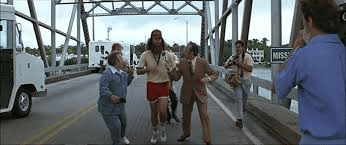
> When Forrest goes on his cross-country run, the Woods Memorial Bridge in downtown Beaufort appears in the scenes. In fact, during the shooting, the Bridge had a sign on it that read: “Welcome to Mississippi.”
Here is our photo of  The Forrest Gump Bridge, it is the same bridge we take the bikes over to get from Lady’s Island Marina to downtown Beaufort.
20180503_11484120180503_114300
bridge

After a full day of touring Beaufort on Bikes, we came back to the boat to rest up & clean up for dinner. We needed a pump-out of the holding tanks, and experienced something for the first time on The Loop – a Pump Out Boat !
Same process as usual, but the small boat services all boats that cannot be reached with the dock-side hoses. The pump-out boat has a 300 gallon tank.
20180503_171127

We ended Thursday with a lovely dinner at Panaini’s restaurant where our dinner was accompanied with live Jazz/Blues music. We were also highly entertained by our waiter and transplanted New York native Mel.
20180503_19084120180503_201733

May 4 – Fri
Friday was a little more of a “work day”.
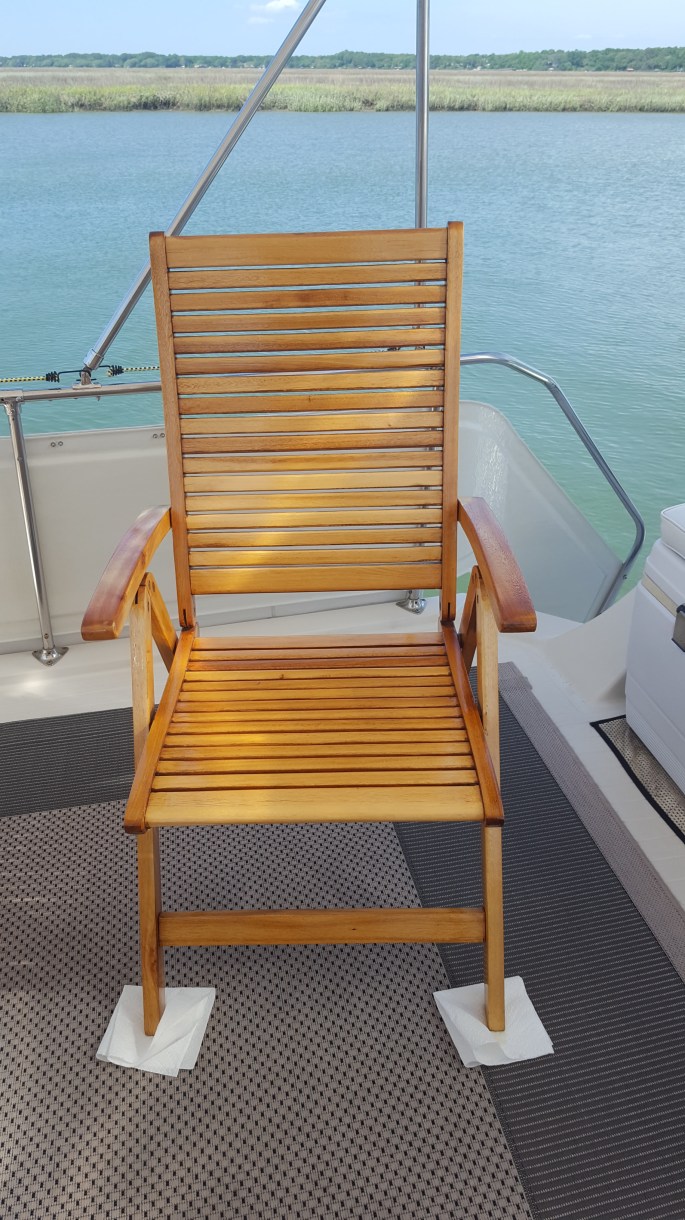
The teak chairs that we have had on the aft deck were gettin’ a little abused/scratched/worn, especially at the arm rests, so it was time for a tune-up. I spent the morning sanding the chairs and the afternoon putting a coat of Man-O-War Marine Varnish on the chairs. The work room at the marina provided a great place to do the sanding. We applied the varnish on the aft deck. First coat went ok, we need to steel wool sand & do 2 more coats this weekend.
20180504_152530

After the chairs, I did some banking, and we watched a little golf on TV, then went to dinner.
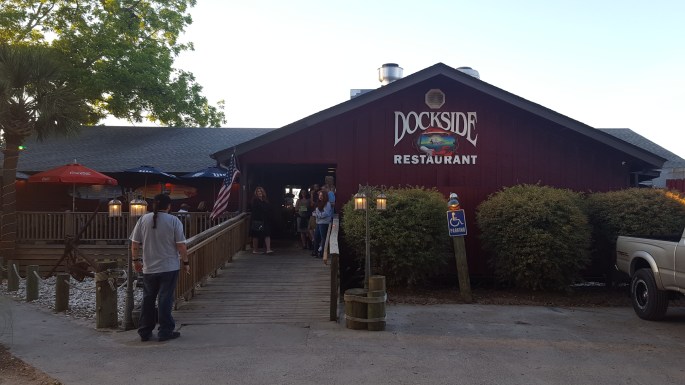
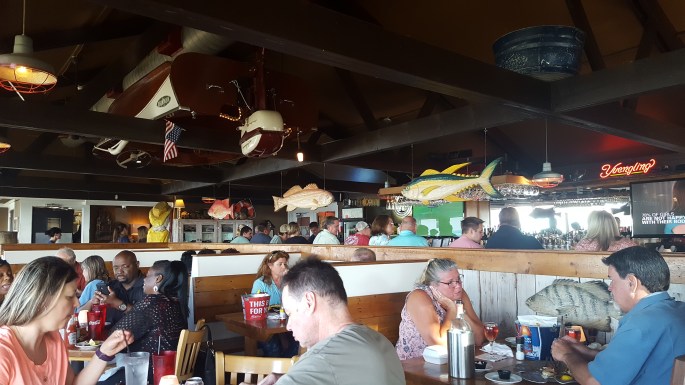
Dinner on Friday night was at a highly rated place right next door to the marina called The Dockside Restaurant.
20180504_192302
20180504_181435
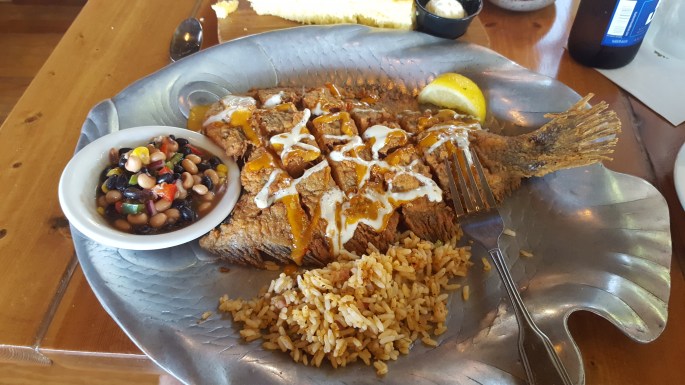
I had the Crispy Scored Flounder recommended by Warren & Bonnie, who we had met at The Fillin’ Station on Tuesday. Nellie had shrimp/flounder combo, and we both enjoyed some amazing corn bread. The flounder was drizzled with both sweet & spicy Asian sauces, it was very good (9 of 10 rating).
20180504_184016

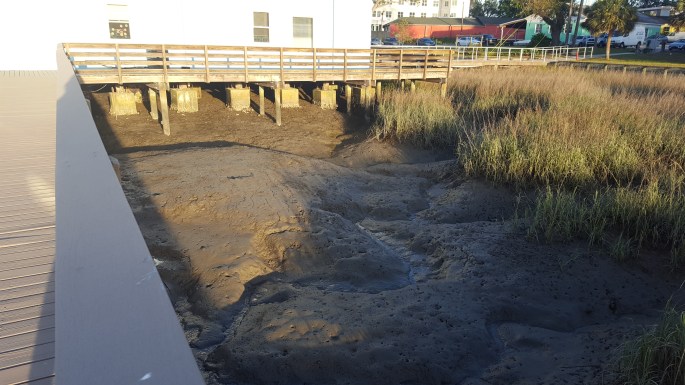
After dinner we came back to the marina. The tide had rolled out leaving a waterbed ground covering that looked like the moon surface.
20180504_192636

May 5 – Sat
Saturday I began the day with a bike ride to the hardware store to get some more steel wool & another varnish brush. After returning to the boat, I gave the chairs coats #2 of the Man-O-War Marine varnish.

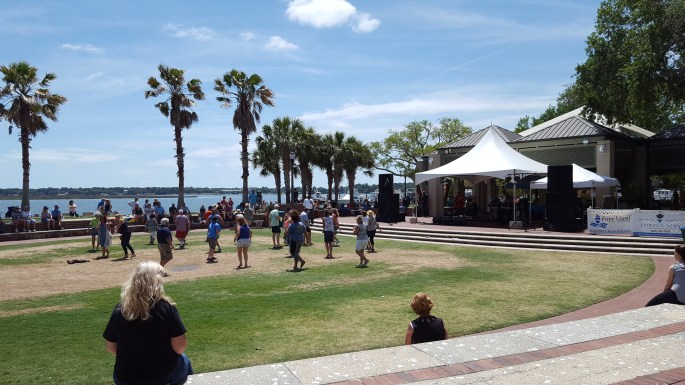
We then cleaned up and headed by Uber over the bridge into downtown Beaufort. Saturday was a special day in Beaufort, with the big “Taste of Beaufort” festival. It was the usual “Taste of” type activities, with lots of food, beer, music., and knick-knack items for sale in tents.
There were 3 bands which started at 11am and finished at 5pm, we stayed and watched all 3. The 1st & 2nd bands were great, the 3rd was ho-hum. The weather was beautiful and it was a wonderful care-free way to spend the afternoon – people watching, boat watching, and listening to some good music.
20180505_12271820180505_12313820180505_12294320180505_12332920180505_14290220180505_124241

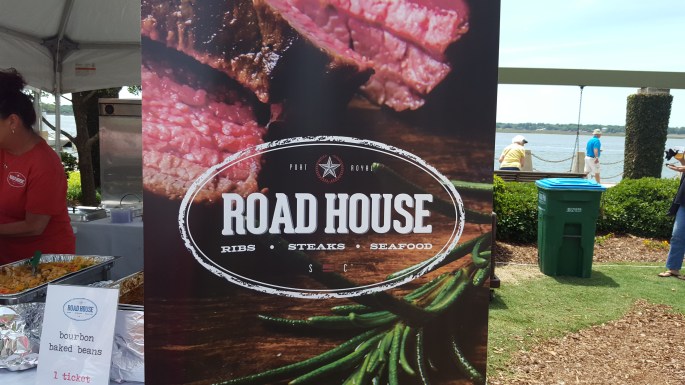
We had lunch from one of the vendor tents representing the restaurant The Port Royal Road House. They featured a snack of Pulled Pork Slider, Mac/Cheeze, & Bourbon Baked Beans for $5.
20180505_125918

We had dinner at a local pub called Luther’s, but I forgot to get any photos.

After the festival & dinner, we returned back to the SS Gettin’ Looped about 6pm. We were quite bushed. We watched the end of the Tigers/Royals baseball game & exchanged some texts with our family back home who were out celebrating Cinco-de-Mayo in metro Detroit (Kenny/Carla, Brenda/Joe, & Paula/Michael).

The night ended with a very nice phone call from our great friends the Schellers & Spraggs.

It was a wonderful day !

May 6 – Sun
Sunday was a very low-key day.
We slept in until 8:45am.
We did some blogging, some clothes washing, completed coat #3 of varnish on the chairs, went grocery shopping, watched some golf, and had hot dogs for dinner.

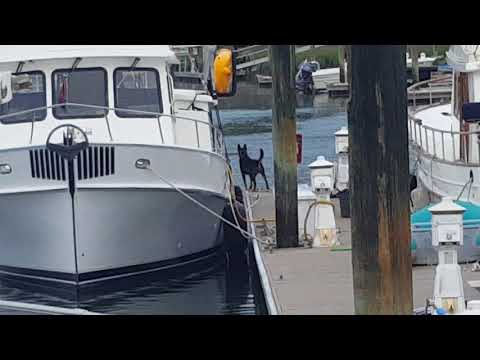
The highlight of the day was watching the marina dog barking at the Dolphins. Yes, back home in Royal Oak Michigan, we watch the dogs barking at the squirrels. On the Great Loop, we watch the dogs bark at the Dolphins = https://youtu.be/BQTq4o9ONsM
Also notice the other boaters watching the dog bark at the dolphins, it was hilarious.
Dog Barking at Dolphins

Next Stops 
> Edisto Island South Carolina for 1 night
> Charleston South Carolina for 4 nights